



Why Do Car Batteries Fail More Frequently During Cold Winter Months?
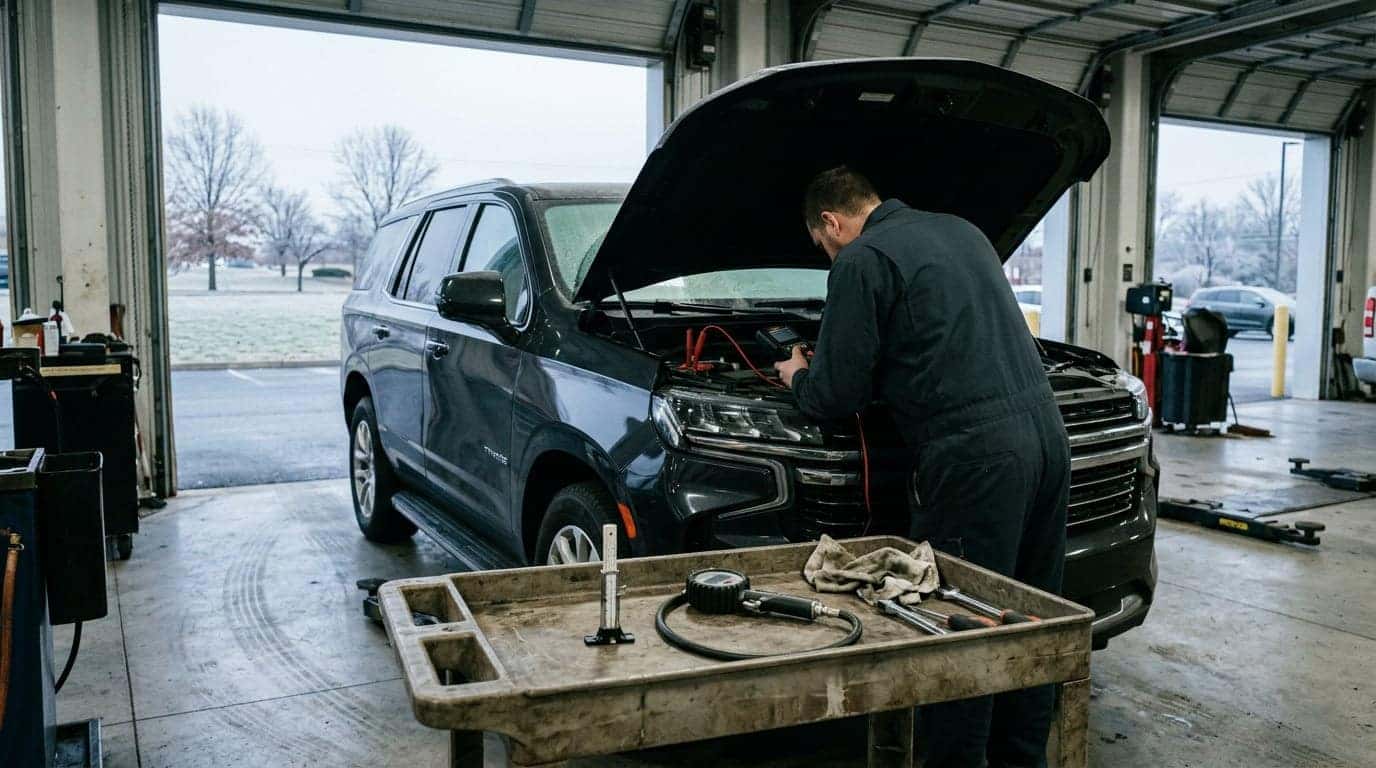
Car batteries fail more frequently during cold winter months because freezing temperatures slow the internal electrochemical reactions that produce electrical current while simultaneously thickening engine oil, which drastically increases starter motor drag. At 32°F, a typical 12-volt lead-acid battery loses approximately 20 percent of its total power output, and near 0°F, available power drops by roughly 50 percent, preventing a weak or summer-damaged battery from turning over a cold engine.
| WINTER BATTERY POWER LOSS |
|---|
| 80°F (Optimal) [====================================================] 100% |
| 32°F (Freezing) [========================================] 80% |
| 0°F (Extreme) [=========================] 50% |
Inside any automotive battery, chemical reactions transfer electrons between internal lead plates to produce voltage. Lower ambient temperatures cause these chemical processes to move sluggishly. A cold engine requires up to 30 percent more electrical current to crank because engine oil thickens in low temperatures, creating heavy mechanical resistance against internal components. When these two factors combine, an aging battery that started a vehicle reliably during warm weather can suddenly fail during the first frost.
Extreme summer heat is actually the primary cause of winter battery failure. High under-hood temperatures evaporate liquid electrolyte in flooded cells and accelerate internal plate grid corrosion. This heat-induced degradation reduces the battery’s overall storage capacity, but because thin summer engine oil offers little mechanical resistance, the vehicle continues starting without showing obvious warning signs. When winter arrives, the underlying capacity loss is immediately exposed by the cold engine’s high electrical demand.
Modern full-size trucks and family SUVs—such as the 2026 Chevrolet Silverado 1500, 2026 GMC Sierra 1500, and 2026 Chevrolet Tahoe—place heavy demands on the electrical system during initial winter startup. Accessories like heated seats, rear glass defrosters, cabin blowers, and heated steering wheels draw heavy current the second remote start is activated. For drivers making brief daily trips around Christiana, short drive times often do not allow the alternator sufficient time to fully restore the charge consumed during a cold start.
Our service advisors notice that truck owners coming in for routine maintenance are often surprised when a battery that started without issue all summer struggles on the first frosty morning. If a battery is more than three years old, having its health evaluated before severe cold arrives helps prevent unexpected failures. Drivers can drop by our Shelbyville location for a fast diagnostic check or give our service center a call to speak with a technician.
Table of Contents
- How Does Temperature Drop Affect Battery Cranking Power and CCA Ratings?
- How Do Cold Snaps Drop Tire Pressure and What Tread Depth Is Safe?
- Are All-Season Tires Sufficient for Middle Tennessee Winters or Are Winter Tires Required?
- What Are the Dangers of Driving on Worn Tires During Winter Rain and Ice?
- Where Can Drivers Request a Local Battery and Charging System Inspection?
- Common Questions About Middle Tennessee Winter Vehicle Care
- Prepare Your Vehicle for Middle Tennessee Winter at Newton Chevrolet GMC
How Does Temperature Drop Affect Battery Cranking Power and CCA Ratings?
Cold Cranking Amps (CCA) measure the electrical current in amperes that a 12-volt battery can deliver at 0°F for 30 seconds while maintaining a minimum operational voltage of 7.2 volts. As ambient temperatures drop, thickened engine oil increases internal drag inside the engine, requiring higher amperage from the starter motor to turn over the crankshaft.
The CCA rating is the main technical specification to review when evaluating battery performance for cold-weather starting. While standard Cranking Amps (CA) measure output at 32°F, the CCA metric tests performance under severe freezing conditions. Turning over a high-displacement V8 engine in sub-freezing weather requires massive electrical surge output. Full-size pickups and full-size SUVs generally require replacement batteries rated between 700 CCA and 850 CCA to ensure reliable ignition in low temperatures.
| Battery Feature | Standard Flooded Lead-Acid | AGM (Absorbed Glass Mat) |
|---|---|---|
| Electrolyte State | Free-flowing liquid acid | Absorbed in fiberglass mats |
| Cold Surge Output | Standard CCA capacity | High CCA surge capacity |
| Recharge Speed | Moderate acceptance rate | Up to 5 times faster recharge |
| Vibration Resistance | Standard casing design | Superior plate compression |
| Spill Resistance | Vent cap maintenance | Fully sealed, non-spillable |
Absorbed Glass Mat (AGM) batteries offer distinct performance benefits over traditional flooded lead-acid batteries in cold weather. Instead of liquid acid sloshing freely, AGM batteries suspend electrolyte in tightly compressed fiberglass mat separators. This structural design lowers internal electrical resistance, speeds up alternator recharge acceptance, and delivers higher surge current during cold starts. Modern vehicles equipped with engine auto-stop/start systems, heavy trailering packages, and complex driver-assist sensors rely on the stable voltage delivery that AGM construction provides.
For drivers in Lewisburg using work trucks across agricultural terrain, maintaining maximum battery output prevents costly morning delays on the job site. When planning pre-winter vehicle upkeep, exploring flexible financing options can help make essential electrical repairs and routine maintenance fit easily into a monthly budget.
How Do Cold Snaps Drop Tire Pressure and What Tread Depth Is Safe?
Tire pressure drops by approximately 1 psi for every 10°F decrease in ambient temperature, making regular monthly pressure checks essential during winter weather. Drivers should maintain a minimum tread depth of 4/32 inch for safe wet and slushy road traction, even though the absolute legal wear limit is 2/32 inch.
When cold weather cold snaps arrive, air molecules inside the tire compress, occupying less volume and lowering overall pressure. A sudden 30°F drop in temperature overnight can cause a vehicle’s tire pressure to drop by 3 psi to 4 psi, which is often enough to illuminate the Tire Pressure Monitoring System warning light on the dashboard. Driving on underinflated tires increases sidewall flex, accelerates shoulder tread wear, and reduces fuel efficiency by raising rolling resistance.
| TIRE TREAD SAFETY DEPTHS |
|---|
| 10/32″ – Brand New Tread [====================================] Optimal |
| 4/32″ – Winter Safe Threshold [===============] Recommended Replacement |
| 2/32″ – Legal Wear Limit [=======] Dangerously Worn |
Checking tire pressure when the tires are cold—meaning the vehicle has been parked for at least three hours—ensures an accurate reading. The correct inflation pressure is listed on the driver-side doorjamb placard, not on the tire sidewall itself, which lists only the maximum inflation limit.
Proper tread depth is equally critical for winter driving safety. Tread channels route standing water, slush, and road debris away from the contact patch to maintain tire traction.
- 10/32 inch to 12/32 inch: Typical depth for a brand-new all-season tire.
- 4/32 inch: Recommended minimum tread depth for stopping safely on wet or icy roads.
- 2/32 inch: Built-in wear bars become flush with the tread; tires are legally worn out and must be replaced immediately.
Routine wheel maintenance prevents uneven tread wear patterns. Scheduling regular wheel alignment services helps preserve tread life across all four tires, and drivers looking for exact original-equipment tire sizes can use an online tire finder tool to inspect replacement options.
Are All-Season Tires Sufficient for Middle Tennessee Winters or Are Winter Tires Required?
Standard all-season tires with adequate tread depth are sufficient for Middle Tennessee’s mild winter climate, though all-weather tires featuring the 3-Peak Mountain Snowflake symbol offer enhanced traction during sudden ice or sleet events.
All-season tires utilize rubber compounds formulated to handle a wide temperature spectrum, from warm summer highways to mild cold spells. However, as temperatures fall below 45°F, the tread rubber in standard all-season tires begins to stiffen, which reduces its ability to grip the pavement. In regions with severe, continuous snowfall, dedicated winter tires are necessary because their soft tread compounds remain pliable in extreme cold.
In Middle Tennessee, severe snowfall is relatively infrequent, but winter conditions often include cold rain, black ice, and brief freezing sleet. All-weather tires bridge the gap between standard all-season and dedicated winter tires. They utilize specialized tread compounds that remain flexible in sub-freezing weather while retaining durability for year-round use. Combined with advanced drivetrain tech like selectable 4WD or AutoTrac automatic 4WD, quality all-season or all-weather tires provide dependable control on cold, wet rural roads.
What Are the Dangers of Driving on Worn Tires During Winter Rain and Ice?
Driving on worn tires during winter rain or freezing weather drastically increases vehicle stopping distances, heightens the risk of hydroplaning, and compromises handling stability during emergency evasive maneuvers.
When tire tread wears down below 4/32 inch, the depth of the circumferential grooves is significantly reduced. These grooves are designed to channel water away from the contact patch. On wet asphalt, a worn tire cannot evacuate water fast enough, forcing the rubber to ride on a thin film of water. This loss of surface contact causes hydroplaning, leaving the driver with little to no steering control or braking response.
| WET STOPPING DISTANCE COMPARISON (50 MPH) |
|---|
| New Tread (10/32″) [===============================] ~195 Feet |
| Worn Tread (4/32″) [========================================] ~250 Feet |
| Expired Tread (2/32″) [=================================================] ~290+ Ft |
On icy or slick pavement, worn tires lose traction almost instantly. National Highway Traffic Safety Administration data indicates that tire-related issues contribute to hundreds of traffic crashes annually, with worn tread being a major factor in loss-of-control incidents. Maintaining deep tread grooves helps ensure the tire can bite into wet or slushy surfaces, keeping the vehicle stable during sudden stops.
Where Can Drivers Request a Local Battery and Charging System Inspection?
Drivers can request a professional battery, alternator, and charging-system inspection at Newton Chevrolet GMC’s certified service center in Shelbyville.
A thorough electrical inspection goes beyond checking basic surface voltage with a handheld voltmeter. Certified technicians use digital battery conductance testers to measure internal resistance and calculate remaining CCA output relative to the battery’s original factory specification. This test identifies degraded internal lead plates before the battery fails completely.
| MULTI-POINT ELECTRICAL DIAGNOSTIC |
|---|
| 1. Conductance Load Test –> Calculates remaining CCA vs. factory spec |
| 2. Alternator Diode Check –> Verifies charging system output under load |
| 3. Parasitic Drain Analysis –> Identifies off-state electronic current draw |
| 4. Terminal Oxidation Scrub –> Cleans corrosion and applies dielectric shield |
During a pre-winter service visit, technicians perform several key electrical checks:
- Battery Load Test: Simulates high starter motor draw to evaluate voltage retention under load.
- Alternator Output Test: Verifies that the charging system delivers proper current back to the battery while high-draw accessories are running.
- Terminal Cleaning: Removes corrosion buildup from battery posts and applies protective terminal sealant.
- Parasitic Drain Test: Checks for abnormal off-state electrical draw from onboard modules that could drain the battery overnight.
Evaluating the battery’s manufacturing date is another important step. The battery casing features a date code or DOT Tire Identification Number equivalent that indicates the month and year of production. Replacing a unit that is four years or older prevents unexpected starting issues when extreme cold weather hits.
Common Questions About Middle Tennessee Winter Vehicle Care
Q: What is the difference between Cold Cranking Amps (CCA) and Cranking Amps (CA)?
CCA measures the discharge current in amperes a 12-volt battery can sustain at 0°F for 30 seconds without dropping below 7.2 volts, whereas Cranking Amps (CA) measures output at 32°F. CCA is the primary rating to check for winter reliability because it measures power under sub-freezing conditions.
Q: How do short winter commutes affect battery charge?
Short winter trips prevent the alternator from fully restoring the electrical energy consumed during a cold start. Operating high-draw electrical accessories like seat warmers and window defrosters on brief commutes leaves the battery in a chronic state of undercharge, accelerating internal sulfation and reducing service life.
Q: Why does the low tire pressure warning light turn on during cold mornings?
Tire pressure drops by about 1 psi for every 10°F drop in outside temperature. On cold mornings, the pressure in a marginally inflated tire can drop below the threshold that triggers the Tire Pressure Monitoring System, but it may turn off as ambient temperatures rise or as driving warms the tires.
Q: Is it safe to jump-start a frozen car battery?
Jump-starting a battery with frozen liquid electrolyte can cause internal plate damage or crack the casing. A frozen battery must be completely thawed to room temperature and inspected for leaks or casing bulges before charging or testing.
Q: What cold-weather features are included on modern GMC commercial vehicles?
Heavy-duty models in our new GMC commercial inventory offer high-output alternators, heavy-duty AGM batteries, and high-capacity cooling systems designed for continuous operation under heavy electrical loads. You can explore how GMC drives American ingenuity with commercial-grade vehicle options built to handle tough winter conditions.
Prepare Your Vehicle for Middle Tennessee Winter at Newton Chevrolet GMC
Taking proactive winter maintenance steps ensures your vehicle starts reliably and handles safely through every cold snap. From digital battery load testing and terminal cleaning to comprehensive tire inspections, proper maintenance prevents sudden breakdowns and keeps your vehicle performing at its best.
Our factory-trained technicians at Newton Chevrolet GMC have the diagnostic tools and technical expertise to handle all your winter prep needs. Stop by our Shelbyville dealership at 2006 N Main St or give our team a call today to schedule your pre-winter vehicle inspection.
0 comment(s) so far on Why Do Car Batteries Fail More Frequently During Cold Winter Months?