



Why Ignoring Brake Fluid Could Put Your Life—and Your Vehicle—At Risk
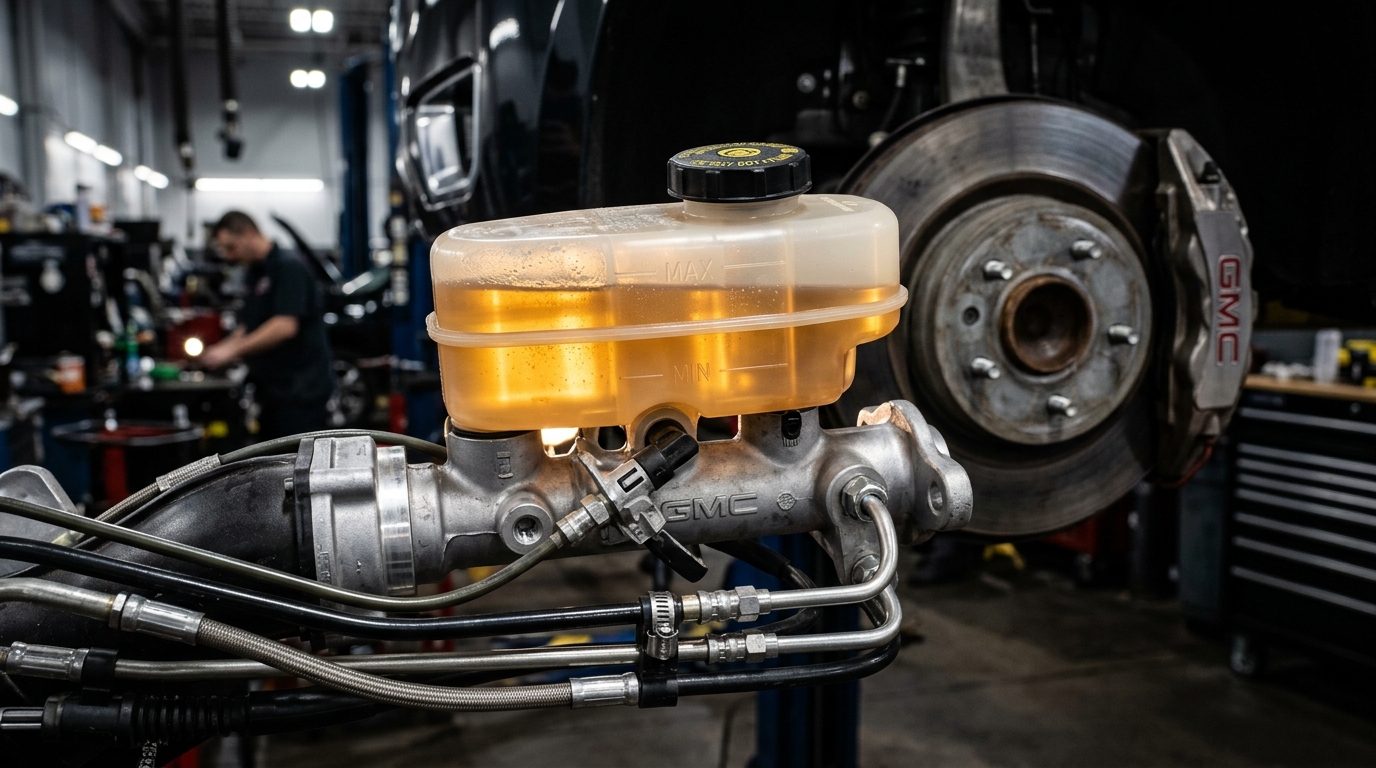
Brake fluid serves as the vital link between your foot on the pedal and the mechanical force that stops your vehicle. In a modern hydraulic system, this fluid is incompressible, allowing it to transmit force instantly from the master cylinder to the brake calipers or wheel cylinders. Without maintaining the integrity of this fluid, the sophisticated safety systems in a new Chevrolet Silverado 1500 or a new GMC Yukon cannot function at their peak performance.
The importance of a brake fluid exchange centers on maintaining the boiling point of the liquid. Under heavy braking, such as descending a steep grade or frequent stops in heavy traffic, the friction between pads and rotors generates intense heat. This heat is transferred to the brake fluid. If the fluid is old or contaminated, its boiling point drops significantly. Should the fluid reach a boil, it creates gas bubbles in the lines. Unlike liquid, gas is compressible, which results in a brake pedal that feels soft or goes all the way to the floor without stopping the vehicle effectively.
Regularly checking the fluid level and condition is a standard part of our multi-point inspections. Most reservoirs feature clear MIN and MAX markings, and the fluid should ideally sit near the maximum line. If you are noticing a change in how your vehicle handles or stops, our team can help you find the right vehicle for your needs or evaluate your current one at our service center. For those driving larger SUVs like the Chevrolet Suburban or GMC Yukon XL, the demand on the braking system is even higher due to the vehicle’s mass, making fluid health a non-negotiable safety standard.
If you have questions about your specific maintenance schedule or want to see the latest safety tech in person, you can call (931) 536-3120 to speak with our experts. For those ready to visit us in person, our Shelbyville location is easily accessible for a full inspection. Whether you are looking at a Chevrolet Trax for city commuting or a Silverado HD for heavy hauling, the hydraulic system remains the most critical safety feature on board.
Table of Contents
- The Chemistry of Braking: Understanding Hygroscopic Fluid
- Recognizing the Warning Signs of Contaminated Brake Fluid
- Brake Fluid Types and Technical DOT Specifications
- Professional Fluid Exchange vs. Simply Topping Off
- Answers to Common Brake Fluid Questions
- Maintain Ultimate Stopping Performance at Newton Chevrolet GMC
The Chemistry of Braking: Understanding Hygroscopic Fluid
Brake fluid is uniquely formulated to be hygroscopic, a chemical property that allows it to absorb moisture from the atmosphere. While this might sound like a flaw, it is actually a design feature intended to prevent water from pooling in the low points of the braking system, where it could freeze in winter or cause localized boiling in summer. However, this absorption has a finite limit. Over time, the moisture content increases, which leads to internal corrosion of metal components like brake lines, pistons, and the ABS control valve.
As the water content rises, the “wet boiling point” of the fluid becomes the primary concern. Industry standards generally recommend a complete brake fluid flush every 2 to 3 years to ensure the moisture levels stay within a safe range. In the humid climate often found around Spring Hill, this moisture absorption can happen more rapidly than in arid regions. When we perform a flush, we are not just replacing a liquid; we are removing the chemical contaminants that eat away at your calipers and master cylinder from the inside out.
Protecting these components is also a matter of long-term value. Many owners who explore financing options for a long-term vehicle purchase want to ensure their investment lasts well beyond the loan term. Using high-quality fluid and adhering to exchange intervals helps prevent expensive repairs to the ABS modulator, which can cost thousands of dollars if it fails due to sludge or rust. We also offer information on auto parts warranties to help you understand the protection available for your vehicle’s essential systems.
Maintaining the entire “corner” of the vehicle is essential for safety, which includes the tires and the brakes working in tandem. If you are already checking your stopping power, it may also be time to find new tires to ensure your grip matches your hydraulic performance. A vehicle with fresh fluid but worn treads will still struggle to stop in an emergency, just as a vehicle with new tires and old fluid might suffer from brake fade.
Recognizing the Warning Signs of Contaminated Brake Fluid
Detecting issues with your brake fluid often requires paying close attention to the “feel” of your vehicle during daily operation. One of the most common red flags is a spongy or soft brake pedal. This occurs when moisture in the lines has turned to vapor, or air has entered the system. If you find that you have to pump the brakes to get a firm response, or if the pedal travels further than usual before the brakes engage, the fluid is likely compromised and requires immediate attention.
Visual inspections can also provide clues about the health of your hydraulic system. Fresh brake fluid is typically clear or has a light amber tint, similar to white wine. As it ages and collects debris, copper, and moisture, it darkens significantly. Fluid that appears dark brown or black is heavily contaminated and has likely lost its protective anti-corrosive properties. When checking under the hood, ensure the level is between the MIN and MAX lines; a low level often indicates either a leak or that your brake pads have worn down, requiring the fluid to move further into the calipers.
For those who want to learn more about brake service, it is important to note that a burning smell after a long drive or heavy braking is a sign of overheating fluid. This is a critical warning that your fluid’s boiling point has been exceeded. If you encounter these symptoms, you should schedule a brake inspection as soon as possible to prevent a total loss of stopping power.
Our parts department makes it easy to order genuine components if your inspection reveals that a leak has damaged a specific line or seal. Addressing these warning signs early not only keeps you safe on the road in Tullahoma but also prevents the secondary damage that contaminated fluid causes to the rubber seals and precision valves within the braking architecture.
Brake Fluid Types and Technical DOT Specifications
Not all brake fluids are created equal, and using the wrong type can lead to seal failure or poor braking performance. Most modern vehicles utilize DOT 3 or DOT 4 glycol-based fluids. The primary difference between these specifications is their boiling point. DOT 4 fluid generally has a higher dry and wet boiling point than DOT 3, making it better suited for high-heat applications or heavier vehicles. While DOT 4 is often backward compatible with DOT 3 systems, you should always consult your owner’s manual or our staff to confirm the correct specification for your model.
There are also specialized fluids like DOT 5, which is silicone-based. It is crucial to remember that DOT 5 should never be mixed with glycol-based DOT 3 or DOT 4 fluids. Mixing them can cause the fluid to gel, leading to catastrophic brake failure. For high-performance vehicles or heavy-duty trucks frequently towing through the rolling hills of Pulaski, we often recommend fluids with higher thermal stability to ensure consistent pedal feel even under extreme loads.
Technical specifications for brake fluid include:
- DOT 3: Minimum dry boiling point of 401°F; minimum wet boiling point of 284°F.
- DOT 4: Minimum dry boiling point of 446°F; minimum wet boiling point of 311°F.
- DOT 5.1: A high-performance glycol-based fluid with a dry boiling point of 500°F.
If you are unsure which fluid your vehicle requires, you can contact our parts department for a definitive answer based on your VIN. Maintaining the correct fluid is just as important as other chassis services. For example, when you learn about tire alignment, you realize that every system must be calibrated correctly to ensure the vehicle tracks and stops straight. If you are planning an upgrade to a newer, more capable model, you can also get pre-approved for financing online to see how a modern braking system fits into your budget.
Professional Fluid Exchange vs. Simply Topping Off
Many drivers assume that adding a little fluid to the reservoir when the level looks low is sufficient maintenance. However, topping off is merely a temporary fix for volume; it does nothing to address the moisture and copper contamination present throughout the rest of the lines. In fact, brake fluid levels naturally drop as your brake pads wear down, as more fluid is required to displace the caliper pistons. Simply adding more fluid can actually mask the fact that your pads are nearing the end of their lifespan.
A professional brake fluid exchange, or “flush,” involves pushing all the old, contaminated fluid out of the master cylinder, lines, and calipers and replacing it with fresh, moisture-free fluid. This process ensures that the entire system is purged of air and debris. When I talk to drivers about their maintenance routines, I often find they are surprised to learn that a flush is a mileage-and-time-based requirement, typically recommended every 30,000 to 36,000 miles.
During a professional service at our center, we do more than just swap the liquid. Our technicians perform a visual check of the entire system.
- Inspecting flexible rubber lines for cracks or bulges.
- Checking metal lines for signs of corrosion or leaks.
- Measuring pad thickness and rotor condition.
- Testing the master cylinder for proper pressure retention.
By having our professional staff handle the exchange, you ensure the system is properly bled, which is the only way to guarantee there are no air pockets left in the lines. This service is often conveniently paired when you schedule your oil change, allowing you to handle all essential fluid maintenance in a single visit. If you prefer to handle minor repairs yourself, you can order genuine OEM parts directly through us to ensure you are using the exact components designed for your Chevrolet or GMC vehicle.
Answers to Common Brake Fluid Questions
The complexity of modern braking systems often leads to questions about how to best care for them. While many owners understand the need for oil changes, the hydraulic system is frequently overlooked until a problem arises. Addressing these concerns before they become safety issues is the best way to maintain your vehicle’s reliability.
Q: How can I tell if my brake fluid is actually bad?
Beyond a change in pedal feel, you can look at the color of the fluid in the reservoir. If it is dark, murky, or contains visible particles, it is contaminated. Technicians also use chemical test strips to measure the moisture content and copper levels in the fluid, providing a scientific basis for an exchange.
Q: Is it safe to drive if the brake light is on?
The brake warning light on your dashboard can indicate several issues, including a low fluid level, a leak in the system, or a problem with the ABS. Because this involves your primary safety system, you should have the vehicle inspected immediately. Driving with a compromised hydraulic system significantly increases your stopping distance and the risk of a collision.
Q: Can I mix different brands of brake fluid?
As long as the DOT rating is the same (for example, two different brands of DOT 4), they are generally compatible. However, it is always best to use a consistent, high-quality fluid like the OEM-recommended products we carry. Never mix glycol-based fluids with silicone-based DOT 5 fluid, as this will damage the system.
Q: Does brake fluid evaporate over time?
Brake fluid does not evaporate like water, as it has a very high boiling point. If your fluid level is dropping, it is either due to normal brake pad wear or a leak in the system. If you find yourself frequently adding fluid, it is time to check for leaks around the calipers, wheel cylinders, and lines.
When you are looking at long-term maintenance, it is also a good idea to shop for tires or view pre-owned specials if you are considering a vehicle with a more modern safety suite. For those planning a purchase, you can explore financing options to see how a well-maintained vehicle holds its value over time.
Maintain Ultimate Stopping Performance at Newton Chevrolet GMC
Ensuring your vehicle is ready for the road means looking beyond the engine and transmission to the systems that keep you in control. A brake fluid exchange is one of the most cost-effective ways to prevent major mechanical failures and ensure your vehicle can stop exactly when you need it to. Whether you are navigating the historic downtown area of Pulaski or commuting through the growth of Spring Hill, your brakes are your most important safety tool.
At our dealership, we provide the expertise needed to keep your Chevrolet or GMC in peak condition. We invite you to discover the Newton Advantage, which combines professional service with a commitment to our community. If you are looking for a new vehicle with the latest in braking technology and driver-assistance features, you can browse our new Silverado inventory or check out the Equinox. We also provide extensive resources for those who want to research the GMC Sierra 1500 or explore the Tahoe.
For a streamlined experience, you can use our online tools to start your purchase or service journey from home. We are proud to offer a wide range of options, including the Chevrolet Trax and the GMC Terrain, all backed by our dedicated service team. If you need immediate assistance, please (931) 536-3120 to speak with our staff about your maintenance needs.
When you are ready for your next service or a new vehicle, our showroom and service center are conveniently located to serve you. From the Chevrolet Colorado to the GMC Sierra HD, we have the inventory and the expertise to keep your vehicle performing at its best. Come see us today and experience the difference that professional, community-focused automotive care can make.
0 comment(s) so far on Why Ignoring Brake Fluid Could Put Your Life—and Your Vehicle—At Risk