



Why Keeping Up with Transmission Fluid Maintenance Protects Your Truck or SUV
Why Professional Transmission Fluid Maintenance Keeps Your Truck or SUV Pulling Strong
When you use your vehicle for heavy-duty tasks like hauling agricultural equipment or towing trailers, the demands on your gearbox increase dramatically. Operating under these heavy loads raises the operating temperature of the transmission, accelerating the breakdown of the protective additives in the fluid. Neglecting this crucial fluid can lead to erratic shifting, gear slippage, and eventually a complete mechanical failure that is incredibly costly to repair.
At Newton Chevrolet GMC, we focus on helping our customers preserve the longevity of their vehicles through proactive, manufacturer-recommended maintenance. If you have questions about your specific model’s service schedule, you can meet our professional staff online to learn more about our team’s qualifications. To speak with an advisor directly about your vehicle’s needs, feel free to give us a quick call at (931) 536-3120. When you are ready to bring your vehicle in, you can find our service center directions to plan your visit to our facility.
Table of Contents
- How Does an Exchange Differ from a Transmission Flush?
- Understanding the Technical Differences and Risks of High Pressure Systems
- When Is an Exchange Necessary for Your Chevrolet or GMC Vehicle?
- Warning Signs and Fluid Color Indicators of Transmission Wear
- Protecting Your Powertrain Investment with Certified Service and Genuine OEM Parts
How Does an Exchange Differ from a Transmission Flush?
Many drivers wonder about the technical distinctions between different transmission fluid services, particularly when comparing a fluid exchange to a traditional transmission flush. These two procedures use entirely different methods to handle old fluid, and understanding the mechanical differences is critical for protecting your powertrain.
A transmission fluid exchange is a highly controlled, passive process designed to replace the vast majority of the fluid in your system without exposing internal components to dangerous levels of pressure. During an exchange, a technician connects a specialized machine directly to the transmission cooler lines. As the vehicle’s engine runs, the transmission’s internal pump naturally directs the old, degraded fluid out into the machine, while the machine simultaneously feeds fresh, clean fluid back into the system at the exact same rate. This method replaces nearly all the fluid, including the large volume held inside the torque converter, which cannot be drained by simply dropping the transmission pan.
A transmission flush, by contrast, is an active procedure that typically relies on external pressure from a machine or chemical cleaning agents to force fluid rapidly through the transmission. The goal of a flush is to forcefully dislodge varnish, sludge, and debris that have accumulated on internal clutches, solenoids, and passages. While this sounds thorough in theory, the high-pressure force can actually create significant mechanical risks, especially in older or higher-mileage gearboxes.
To help visualize how these two popular service methods stack up against each other, consider the following technical comparison:
- Fluid Replacement Volume: An exchange replaces roughly 90% to 95% of the total fluid volume by utilizing the vehicle’s own internal pump. A standard drain-and-fill only replaces about 30% to 40% of the fluid because a massive portion remains trapped in the torque converter and cooler lines.
- Pressure Dynamics: An exchange operates strictly under the normal working pressure of the vehicle’s internal transmission pump. A flush introduces external, high-pressure force from an outside machine.
- Debris Management: An exchange gently carries suspended contaminants out of the system. A flush can forcefully break loose large chunks of sludge, potentially moving them into tiny hydraulic passages where they can cause blockages.
- Chemical Additives: An exchange uses only fresh, manufacturer-approved fluid. A flush often incorporates aggressive chemical solvents to dissolve deposits, which can sometimes degrade internal rubber seals if not completely removed.
Understanding these maintenance differences is just as important as keeping up with other regular automotive tasks. If you need to take care of other routine items while researching your transmission care, you can easily schedule your oil change online with our team. We also provide resources to help you learn about financing options for major services, or you can learn about tire alignment to keep your vehicle driving straight and true.
Understanding the Technical Differences and Risks of High Pressure Systems
The primary concern with high-pressure transmission flushes is how they interact with the delicate internal components of modern automatic transmissions. Modern gearboxes rely on highly sensitive electro-hydraulic control units, often referred to as valve bodies, which act as the brain of the transmission. These valve bodies contain incredibly narrow passages, check valves, and tiny electronic solenoids that regulate fluid flow to change gears.
When a high-pressure flush is performed on a vehicle that has gone a long time without service, the sudden force can dislodge heavy deposits of clutch material, varnish, and metal wear debris. Instead of being completely swept out of the transmission, these dislodged particles can migrate directly into the valve body. Once inside, they can easily clog the tiny fluid passages or cause sensitive solenoids to stick. This can result in immediate shifting problems, such as harsh gear engagement, delayed shifting, or a complete inability to engage certain gears.
Additionally, the aggressive chemical cleaners sometimes used during a flush can compromise the integrity of internal rubber seals and gaskets. Over time, these chemicals can cause seals to harden, shrink, or tear, leading to internal pressure leaks that prevent the transmission clutches from engaging properly.
At Newton Chevrolet GMC, we prioritize safe, manufacturer-approved maintenance methods that protect your vehicle’s warranty and long-term reliability. If you are currently driving an older vehicle and are concerned about its transmission health, you might want to look at our quality pre-owned vehicles and view pre-owned specials currently running on our lot. You can also get pre-approved for financing online to streamline your next vehicle purchase, and discover the Newton advantage to see why so many local drivers trust us with their automotive needs.
When Is an Exchange Necessary for Your Chevrolet or GMC Vehicle?
Determining when to schedule a transmission fluid exchange depends heavily on your specific vehicle model, driving habits, and the recommendations outlined in your owner’s manual. For most modern Chevrolet and GMC trucks, SUVs, and cars, the manufacturer recommends performing a fluid exchange every 45,000 to 100,000 miles, depending on whether your driving conditions are classified as normal or severe.
Severe driving conditions are incredibly common for drivers in rural areas like Christiana, where vehicles are regularly driven on unpaved gravel roads, used to haul heavy agricultural equipment, or subjected to frequent stop-and-go driving. Under these demanding conditions, the transmission fluid runs hotter, causing it to break down much faster than it would during steady highway cruising. If your daily routine involves towing boats to nearby rivers, hauling heavy payloads, or navigating hilly terrain, you should adhere to the shorter service interval to prevent premature wear.
Whether you are driving a heavy-duty work truck or a family SUV, keeping the transmission fluid fresh is the single best way to protect your powertrain. If you are looking to upgrade to a vehicle with robust towing capabilities, you can shop new Chevrolet Silverado 1500 inventory to find a truck built for hard work. For families needing maximum passenger space and cargo room, you can also shop new GMC Yukon inventory to find an SUV equipped with a highly capable automatic transmission designed for smooth, reliable performance.
Warning Signs and Fluid Color Indicators of Transmission Wear
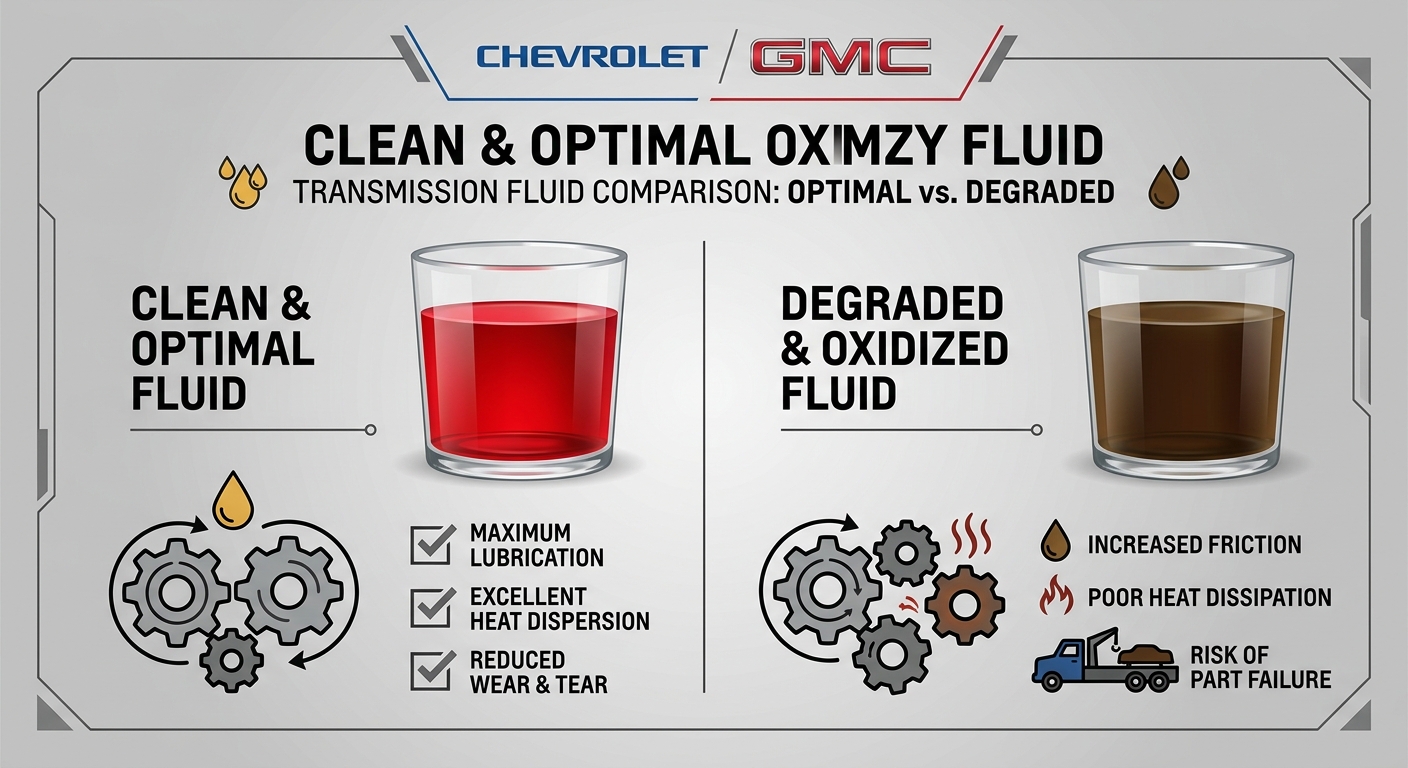
Paying close attention to how your transmission behaves can help you catch fluid degradation before it escalates into severe mechanical damage. One of the most reliable ways to assess the health of your transmission is by checking the color and odor of the fluid. Healthy automatic transmission fluid is typically bright red or pink and relatively translucent. As the fluid ages and absorbs heat, it gradually darkens to a light brown, and eventually to a dark brown or black color.
If you check your transmission dipstick and find that the fluid is dark brown or black, or if it emits a distinct burnt odor, the fluid has lost its ability to protect internal components and must be exchanged immediately. In addition to visual cues, there are several physical warning signs that indicate your vehicle is overdue for a fluid exchange:
- Slipping Gears: If your engine revs up but your vehicle struggles to accelerate, or if it unexpectedly pops out of gear while driving, the transmission is likely slipping due to a lack of hydraulic pressure or worn friction plates.
- Delayed or Harsh Shifting: A noticeable delay when shifting from park to drive, or rough, jarring gear changes while accelerating, often points to contaminated fluid or clogged valve body passages.
- Unusual Noises: Grinding, whining, or humming noises coming from the transmission area are clear indicators of increased friction caused by worn-out lubricant.
- Check Engine Light: Low fluid levels or degraded fluid can cause internal pressure drops, triggering diagnostic trouble codes that illuminate the check engine light on your dashboard.
Monitoring these warning signs is crucial for keeping your vehicle in peak operating condition. While you keep an eye on your vehicle’s mechanical health, you can also explore financing options for your next purchase, or explore Super Cruise technology to see how hands-free driving is changing the way we travel. We also invite local organizations to request a sponsorship to see how we support our surrounding communities.
Protecting Your Powertrain Investment with Certified Service and Genuine OEM Parts
When it comes to servicing the complex transmission in your Chevrolet or GMC vehicle, relying on certified technicians and genuine OEM parts is the best way to ensure the job is done right. Modern automatic transmissions, such as the advanced 10-speed automatic found in many of our trucks and SUVs, are highly sophisticated machines that require specific fluid formulations to operate correctly. Using the wrong type of fluid can lead to immediate shifting issues and severe internal wear.
Our factory-trained technicians at Newton Chevrolet GMC have the specialized equipment and diagnostic tools required to perform a precise transmission fluid exchange. We use only genuine Dexron transmission fluids, which are engineered specifically to meet the performance and temperature demands of your vehicle’s gearbox. During the service, we also inspect the transmission cooler lines, check for leaks, and ensure the fluid level is precisely calibrated to prevent foaming or starvation.
In addition to transmission care, our service department is fully equipped to handle all of your vehicle’s maintenance needs. If you need to address other areas of your vehicle, you can order genuine OEM parts directly through our website, or shop new tires to prepare your vehicle for changing road conditions. For those looking to maximize their maintenance budget, we encourage you to view service and parts specials for current savings. If you need assistance with unexpected repair costs, you can also explore service financing options to find a payment plan that works for you.
For drivers navigating the rolling hills and agricultural routes around Lewisburg, keeping your transmission in top shape ensures your vehicle is always ready for the next task. Whether you need to schedule brake service, replace an aging battery, or have your transmission fluid inspected, our team is here to help. Contact us today or visit our service center to keep your vehicle running smoothly for miles to come.
0 comment(s) so far on Why Keeping Up with Transmission Fluid Maintenance Protects Your Truck or SUV