



Why Is a Transmission Fluid Exchange More Expensive Than a Basic Drain and Fill?
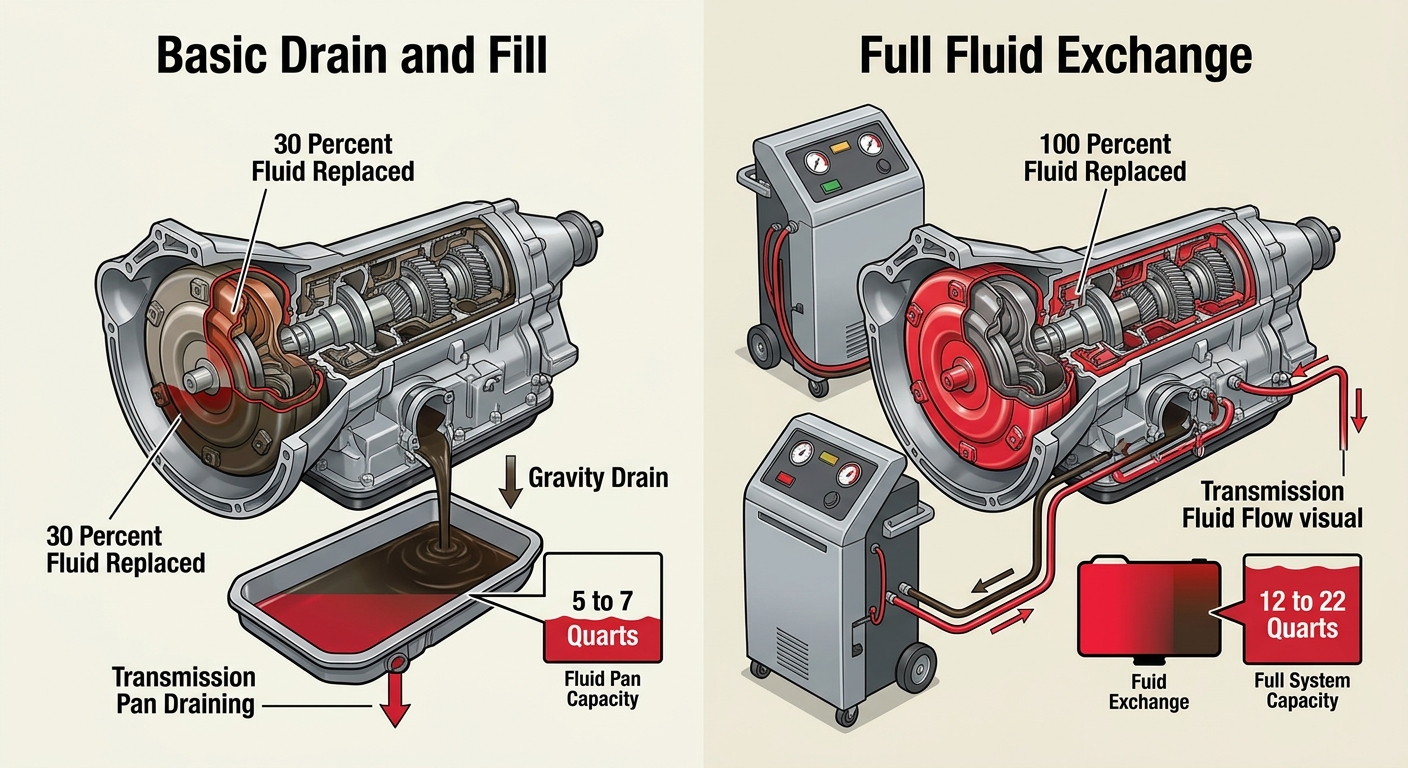
A transmission fluid exchange costs more than a standard drain and fill because it requires specialized exchange machinery, significantly higher fluid volume, and additional technician labor. While a basic drain replaces only 20 to 40 percent of the old fluid resting in the transmission pan, a machine-assisted fluid exchange connects directly to the cooler lines to replace nearly 100 percent of the fluid throughout the torque converter, valve body, and cooling lines using 12 to 22 quarts of fresh fluid compared to just 5 to 7 quarts for a pan drain.
Understanding the mechanical differences between these two maintenance procedures clarifies why the price points differ. A standard drain and fill is a simple gravity service. A technician removes the drain plug or drops the bottom pan, allowing whatever fluid is sitting in the reservoir to spill out. While this removes surface debris, a massive portion of old, oxidized fluid remains trapped inside the torque converter and fluid cooler lines. Refilling the pan simply dilutes the remaining dirty fluid with a small supply of fresh fluid.
In contrast, a full fluid exchange utilizes specialized fluid displacement equipment that taps into the transmission’s fluid circulation loop. As the vehicle’s engine runs or the machine applies controlled fluid movement, new fluid is introduced while old fluid is simultaneously extracted. This process ensures that worn fluid suspended with micro-abrasives and degraded thermal additives is completely cleared from every passage inside the gearbox.
Because a full exchange consumes more than double the fluid volume and involves specialized line hookups, precision level monitoring, and warm-up cycles, the overall material and labor footprint is naturally higher. Drivers looking to protect their vehicle’s powertrain can view our Shelbyville service center address or give our team a quick call to discuss fluid condition testing before scheduling work.
Table of Contents
- What Is a Transmission Fluid Exchange and How Does It Work?
- How Does a Fluid Exchange Differ From a High-Pressure Transmission Flush?
- Is a Transmission Fluid Exchange Necessary for New GMC and Chevrolet Vehicles?
- Does a Transmission Fluid Exchange Include Filter Replacement and How Long Does It Take?
- What Are the Primary Signs and Fluid Color Changes That Signal Service Is Due?
- Can Dirty Transmission Fluid Trigger a Check Engine Light or Indicate Full Failure?
- Common Questions About Transmission Fluid Maintenance and Service
- Keep Your Transmission Running Smoothly at Newton Chevrolet GMC
What Is a Transmission Fluid Exchange and How Does It Work?
Specialized equipment enables a transmission fluid exchange to replace nearly all degraded fluid from critical components like the torque converter and cooling lines. Unlike a manual pan drain, this service integrates with the transmission’s cooling system to push clean, high-grade fluid through the entire hydraulic loop while safely evacuating the old fluid.
Automatic transmissions rely on hydraulic fluid not just for lubrication, but as the primary medium to build pressure, cool internal clutches, and actuate gear changes through intricate valve body channels. Over thousands of miles, intense heat causes transmission fluid to shear and oxidize, reducing its ability to cushion gear engagements. When you perform a simple pan drain, you only remove fluid in the lower reservoir. The fluid trapped inside the torque converter—which operates as the fluid coupling between the engine and transmission—remains completely untouched.
During a professional fluid exchange service, technicians connect dedicated service lines to the vehicle’s transmission cooler ports. Fresh, manufacturer-specified fluid, such as DEXRON VI or specialized full-synthetic ATF, is fed into the unit while old fluid is displaced into a containment tank. The equipment matches incoming and outgoing fluid flow to prevent pressure spikes or fluid starvation.
This complete fluid turnover ensures that fresh anti-wear additives and friction modifiers are distributed across every clutch pack and electronic solenoid. Maintaining proper fluid hygiene prevents thermal breakdown, smooths out gear shifts, and protects heavy-duty components under load. Vehicle owners planning for major maintenance milestones can also review flexible vehicle financing options to help budget for comprehensive service packages.
How Does a Fluid Exchange Differ From a High-Pressure Transmission Flush?
A transmission fluid exchange relies on low-pressure fluid displacement or the vehicle’s own internal fluid pump to gently swap out old fluid, whereas a high-pressure transmission flush uses external pressure pumps or chemical detergents to force fluid through the system. High-pressure flushing carries significant risk on older or higher-mileage vehicles because aggressive force can dislodge settled metallic particles and clutch debris, pushing them directly into sensitive solenoid screens and valve passages.
The distinction between a low-pressure exchange and an aggressive flush is vital for long-term transmission health. Over time, normal clutch wear creates micro-particles that settle harmlessly in low-flow pockets of the transmission case or on pan magnets. High-pressure flush equipment can blast those settled deposits back into circulation. Once dislodged, these abrasive particles can jam shift solenoids, score mirror-finished valve bores, or restrict tiny fluid orifices, leading to immediate shifting failures.
A fluid exchange avoids these hydraulic shocks entirely. By allowing the fluid to circulate at normal system operating pressures, the exchange procedure gently sweeps away degraded fluid without stirring up heavy pan deposits. It purges old, thermally stressed fluid while keeping the internal environment stable.
If a transmission has gone over 100,000 miles without a single fluid service, attempting an aggressive flush is highly discouraged. In those high-mileage scenarios, technicians inspect the fluid first to determine whether a gentle fluid exchange or a series of gradual drain-and-fill services is the safest path to preserve clutch friction without dislodging debris.
Is a Transmission Fluid Exchange Necessary for New GMC and Chevrolet Vehicles?
A transmission fluid exchange is necessary for modern Chevrolet and GMC vehicles because advanced multi-speed automatic gearboxes generate intense internal friction and thermal stress, especially when subjected to severe driving conditions. While factory maintenance schedules may list fluid inspection intervals up to 100,000 miles for light highway use, severe service schedules require fluid exchanges every 45,000 to 60,000 miles to preserve shift quality and internal component life.
Modern GM trucks and SUVs frequently utilize sophisticated 8-speed automatic and 10-speed automatic transmissions. These gearboxes rely on tight internal tolerances, electronic solenoids, and specialized low-viscosity synthetic fluid to deliver quick shifts and optimal fuel efficiency. However, severe driving conditions quickly accelerate fluid breakdown. In real-world driving, severe conditions include:
- Frequently towing trailers, campers, or equipment
- Hauling heavy payloads in truck beds or commercial vans
- Navigating hilly or mountainous terrain regularly
- Driving in stop-and-go traffic during high summer heat
- Making repeated short trips under 10 miles in colder weather
For drivers hauling livestock trailers across gently rolling farmland around Christiana, the continuous load on the torque converter generates localized fluid temperatures that degrade protective additives far faster than flat highway cruising. Heat breaks down the friction modifiers that keep clutch plates engaging smoothly, leading to shudder and delayed responses.
Regular fluid exchanges ensure these modern gearboxes operate with pristine fluid film strength, preventing costly internal wear on planetary gear sets. Business owners and fleet managers keeping heavy equipment active can explore our new GMC commercial models to compare current heavy-duty powertrain specs and severe-duty maintenance recommendations.
Does a Transmission Fluid Exchange Include Filter Replacement and How Long Does It Take?
A professional transmission fluid exchange typically takes between 60 to 90 minutes to complete, and whether it includes a filter replacement depends on the vehicle’s transmission pan and filtration design. Transmissions designed with a removable bottom pan receive a new internal filter and pan gasket as part of a complete fluid service, whereas sealed transmission designs rely entirely on high-volume fluid displacement to clear suspended contaminants.
When servicing a transmission with a removable pan, the service process follows a thorough sequence:
- Technicians drain the lower pan reservoir and carefully unbolt the transmission pan.
- The old pan gasket is removed, and the pan is inspected for clutch wear debris and metal shavings.
- The pan magnet is thoroughly cleaned of fine metallic dust.
- The old pan-mounted filter is unclipped and replaced with a fresh OEM filter unit.
- A new pan gasket is installed, the pan is torqued to factory specifications, and exchange lines are connected for the fluid service.
The physical inspection during pan removal provides immense diagnostic value. While a thin layer of fine gray dust on the pan magnet is normal from routine clutch wear, larger metal flakes or brass particles point to mechanical wear that fluid service alone cannot fix.
For vehicles with integrated, non-removable transmission filters, dropping the pan is not an option without disassembling the entire transmission. On these models, the machine exchange itself is the primary method used to sweep out microscopic debris before it can settle. Drivers needing specific replacement gaskets, pan bolts, or fluid filters can contact our Chevrolet and GMC parts team to source genuine components matched to their specific VIN.
What Are the Primary Signs and Fluid Color Changes That Signal Service Is Due?
Fresh automatic transmission fluid is bright translucent red, while fluid that has turned dark brown or opaque black with a sharp burnt odor indicates severe oxidation and requires an immediate fluid exchange. Beyond visual color changes, operational signs such as rough gear engagement, slipping under acceleration, delayed response when shifting into Drive, or a noticeable shudder between 30 and 50 mph all signal degraded fluid.
Monitoring fluid condition provides a clear look into internal transmission health. Here is how fluid appearance translates to service urgency:
| Fluid Color & Appearance | Condition Status | Recommended Service Action |
|---|---|---|
| Bright Red, Translucent | Healthy & Fresh | No service needed; perform routine checks |
| Light Brown, Slightly Darkened | Normal Wear | Schedule a fluid exchange at next maintenance interval |
| Dark Brown, Opaque | Thermally Degraded | Perform fluid exchange promptly to restore protection |
| Black, Burnt Odor | Severely Overheated | Diagnostic inspection required before replacing fluid |
Truck owners coming in for service often ask whether dark fluid on the dipstick means internal components are failing before they ask about service options. In many cases, dark fluid simply means the fluid’s thermal boundary has been pushed by high operating heat, causing friction modifiers to break down. Replacing that oxidized fluid before metal-on-metal contact occurs restores hydraulic pressure and extends component life.
Ignoring these physical indicators leads to operational trouble. For drivers navigating daily highway commutes and stop-and-go rural transport around Lewisburg, degraded fluid causes hydraulic pressure drops that manifest as hesitant shifts or sudden jolts when changing gears. Scheduling a fluid exchange at the first sign of discoloration prevents localized heat build-up from damaging internal clutch linings.
Can Dirty Transmission Fluid Trigger a Check Engine Light or Indicate Full Failure?
Dirty or degraded transmission fluid frequently triggers check engine lights and transmission warning indicators because low fluid pressure directly interferes with electronic shift solenoid operation. Modern vehicle control modules monitor gear ratios, solenoid response times, and fluid temperatures constantly; when degraded fluid slows down hydraulic response, the computer logs diagnostic trouble codes for gear ratio errors or solenoid performance.
Shift solenoids use precise hydraulic pressure to open and close internal fluid gates, directing power to specific clutch packs. When transmission fluid becomes thick with suspended carbon and debris, or loses viscosity from overheating, these solenoids cannot build pressure quickly enough. The vehicle’s computer registers this delay as shift hesitation and illuminates a dashboard light to protect the transmission from further heat build-up.
However, it is critical to distinguish between dirty fluid issues and mechanical transmission failure:
- Issues Fixed by Fluid Exchange: Rough shifts, minor shudder, delayed engagement on cold starts, elevated operating temperatures, and pressure-related solenoid fault codes.
- Signs of Mechanical Failure: Engine revs freely without vehicle movement (severe slipping), harsh grinding noises from metallic contact, burnt fluid filled with large metal fragments, or complete loss of Reverse gear.
If internal clutch plates have burned down to their steel backing plates, changing the fluid will not restore friction. A fluid exchange is preventive maintenance designed to preserve working mechanical parts—it cannot rebuild components that have suffered physical destruction. Identifying pressure codes early and replacing oxidized fluid prevents electronic glitches from turning into major mechanical failures.
Common Questions About Transmission Fluid Maintenance and Service
Q: Does changing dirty fluid cause a slipping transmission to get worse?
A: Changing fluid on a transmission that is already slipping heavily from worn clutch plates can sometimes exacerbate slippage if the old friction debris suspended in the fluid was assisting gear engagement. In these extreme situations, a diagnostic check is required prior to service, as a fluid exchange cannot restore worn friction material.
Q: What is the difference between DEXRON VI and standard synthetic fluid?
A: DEXRON VI is the factory-engineered specification approved for General Motors automatic transmissions, featuring precise viscosity characteristics and thermal stability designed specifically for GM clutch friction materials and electronic shift solenoids. Using non-approved universal fluids can result in rough shifting and improper hydraulic pressure.
Q: Should I combine my fluid service with other routine maintenance?
A: Bundling your fluid maintenance with other chassis checks optimizes shop time and keeps your vehicle performing safely on the road. Combining transmission service with a professional tire alignment inspection or scheduling a comprehensive brake inspection helps identify uneven wear patterns and hydraulic system health during the same service visit.
Q: How does frequent towing impact fluid change intervals?
A: Heavy towing significantly elevates internal fluid temperatures within the transmission cooler and torque converter, accelerating fluid oxidation and thermal degradation. Under regular towing duty, fluid replacement intervals should be reduced from standard driving schedules down to 30,000 to 45,000 miles to preserve shift quality.
Q: How long can I drive on dark transmission fluid before servicing?
A: Dark fluid indicates that anti-wear additives and friction modifiers are depleted, making prompt service essential to prevent accelerated wear on internal clutches and solenoids. Operating indefinitely on oxidized fluid exposes internal components to excessive heat and metal-on-metal friction.
Keep Your Transmission Running Smoothly at Newton Chevrolet GMC
Staying ahead of transmission fluid maintenance is the single most effective way to protect your vehicle’s powertrain and avoid premature mechanical repairs. Whether your truck or SUV is due for a routine mileage check or requires a complete, machine-assisted fluid exchange, factory-trained technicians have the equipment, genuine fluids, and diagnostic tools to ensure the job is done right.
Our service team performs thorough fluid checks and pan inspections to give you clear, transparent answers about your transmission’s health. You can easily find our service center in Shelbyville or give our service advisors a call to schedule your transmission fluid service today.
0 comment(s) so far on Why Is a Transmission Fluid Exchange More Expensive Than a Basic Drain and Fill?