



What Is the Average Cost of a Radiator Flush and Cooling System Service for a GMC Yukon?
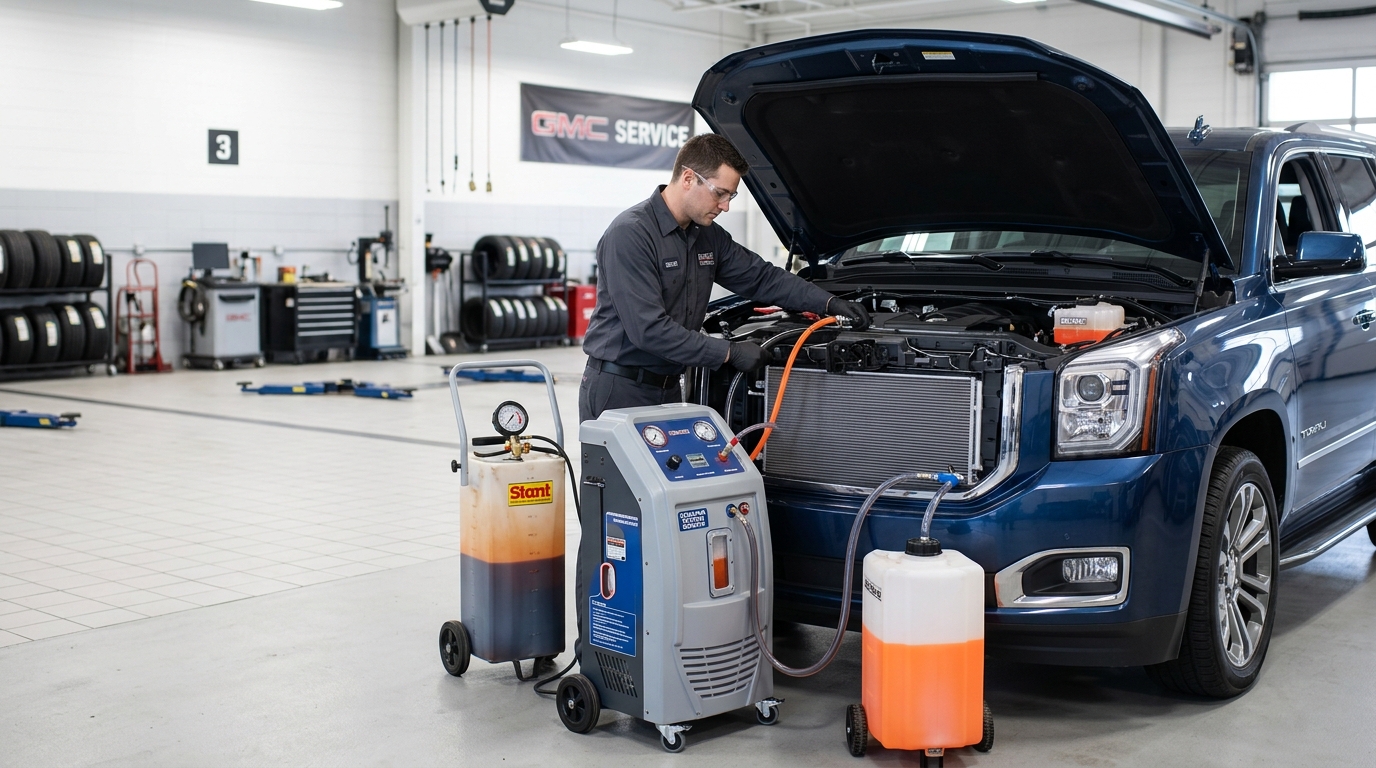
A professional radiator flush and cooling system service for a GMC Yukon generally costs between $150 and $250. This routine maintenance involves draining old coolant, pressure-flushing the radiator and internal water jacket to remove accumulated scale, and refilling the system with fresh Dex-Cool fluid formulated for General Motors engines.
Total pricing varies based on fluid capacity and vehicle configuration. Models equipped with auxiliary rear heating cores or heavy-duty towing packages require additional coolant volume beyond the standard reservoir capacity. Labor costs cover pressure testing the radiator cap, checking thermostatic operation, and evaluating the condition of upper and lower radiator hoses. Skipping this service allows corrosion inhibitors to break down, which can lead to clogged heat exchangers, water pump impeller wear, and severe engine overheating that leads to expensive cylinder head repairs.
Fresh coolant contains rust preventatives that preserve aluminum engine blocks, water pump seals, and heater cores. High ambient summer temperatures place substantial thermal stress on full-size SUVs, particularly when pulling heavy loads or idling with full air conditioning engaged. If your temperature gauge reads higher than normal or you suspect a cooling issue, reach out to our team with a quick phone call or visit our Shelbyville service center location for a cooling check.
Table of Contents
- How Do You Check Coolant Levels and Identify a Failing Radiator in a Chevy Silverado?
- Why Is Your Chevy Truck Overheating? Thermostat Issues, Warning Lights, and Fan Clutches
- How Does GMC Sierra Climate Control Work and When Should You Replace the Cabin Air Filter?
- Frequently Asked Questions About Chevy and GMC Summer Cooling System Maintenance
- Keep Your Truck Cool This Summer at Chevrolet GMC
How Do You Check Coolant Levels and Identify a Failing Radiator in a Chevy Silverado?
Checking coolant levels in a Chevy Silverado requires inspecting the translucent overflow reservoir under the hood while the engine is completely cold, verifying that the fluid rests between the cold fill line and maximum indicator mark. Identifying a failing radiator involves watching for low coolant dashboard alerts, puddles under the front bumper, discolored fluid, or bent cooling fins along the front grille.
Coolant level checks should never be performed while an engine is hot, as opening a pressurized expansion tank can spray hot coolant and steam. When reviewing the fluid reservoir, healthy coolant appears bright and clear rather than dark, cloudy, or sludgy. A steady drop in fluid levels without visible exterior spots often indicates an internal leak near the intake manifold or head gasket.
Dust and field debris encountered on rural drives near Christiana can accumulate in outer radiator fins, blocking airflow and diminishing heat transfer capacity. When radiator seams deteriorate or internal tubes become restricted, steam emissions and sweet-smelling vapor appear under the hood. For drivers whose daily workloads demand heavy-duty towing performance, upgrading to our new GMC Sierra 1500 inventory offers factory-installed heavy-duty cooling packages designed for strenuous conditions.
Why Is Your Chevy Truck Overheating? Thermostat Issues, Warning Lights, and Fan Clutches
A Chevy truck typically overheats due to a stuck-closed thermostat restricting coolant circulation, a failing fan clutch that cannot pull sufficient airflow across the radiator, or a loss of system pressure. When engine temperatures exceed normal operating thresholds, a red thermometer icon dipping into fluid lights up on the driver instrument panel to signal an immediate thermal event.
The thermostat serves as the central valve regulating fluid passage between the engine block and radiator core. When a thermostat fails in the closed position, liquid remains trapped within the engine, causing rapid temperature spikes even when the coolant reservoir remains full. On older truck configurations, a mechanical radiator fan clutch relies on viscous fluid engagement; as this clutch wears down, the fan turns freely without drawing adequate air at low speeds or during extended idling.
Instrument cluster warning displays and temperature gauges give early indication before engine components suffer permanent heat distortion. Modern General Motors powertrains utilize protective engine management steps, reducing engine power output to minimize thermal strain when temperatures climb too high. Addressing worn fan belts, water pump leakage, or stuck thermostats early protects long-term powertrain reliability. If major mechanical service or vehicle replacement becomes necessary, you can review our vehicle financing resources to explore structured options for your budget.
How Does GMC Sierra Climate Control Work and When Should You Replace the Cabin Air Filter?
The automatic climate control system in a GMC Sierra uses interior temperature sensors, ambient air sensors, and solar radiation monitors to automatically regulate blower speed, air distribution doors, and compressor output to hold your set cabin temperature. Replacing the cabin air filter is recommended every 22,500 miles under typical driving conditions, or sooner if interior air volume decreases.
A clean cabin air filter traps environmental dust, pollen, spores, and road grime before outside air enters the ventilation system. As debris fills the filter media, air resistance increases, forcing the HVAC blower motor to work harder while reducing cold air velocity coming from the dash vents. Installing a fresh filter restores proper airflow, reduces electrical load on the blower motor, and maintains rapid cabin cooling during hot afternoons.
Frequent travel along agricultural dirt roads in Lewisburg accelerates filter clogging and calls for brief mid-season filter inspections. Utilizing original equipment filter media ensures proper sealing inside the HVAC housing, keeping dust away from the evaporator core and preserving interior air freshness. You can read further details on truck capabilities in our GMC Sierra 1500 research guide or connect directly with our dedicated auto parts department to source genuine replacement filters.
Frequently Asked Questions About Chevy and GMC Summer Cooling System Maintenance
Q: What are the main signs that a cabin air filter needs replacement?
Common indicators of a clogged cabin air filter include noticeably reduced airflow from dash vents, higher blower fan noise on peak settings, persistent musty smells inside the cabin, and sluggish windshield defrosting performance. Replacing a dirty filter restores full HVAC circulation, improves occupant comfort, and prevents excess wear on the interior blower motor.
Q: How does hot summer weather affect battery life?
High ambient summer temperatures accelerate internal chemical reactions and liquid evaporation inside 12-volt vehicle batteries, leading to plate corrosion and premature grid breakdown. Even when a vehicle starts without hesitation, extreme heat diminishes total reserve capacity. Having your battery load-tested during regular summer cooling checks prevents unexpected starting failures.
Q: Should tire pressure be adjusted when summer temperatures spike?
Tire pressure should always be checked while tires are cold—before driving—and set to the pressure indicated on the driver door-jamb placard. Ambient temperature increases cause tire pressure to rise by about one pound per square inch for every ten-degree temperature gain. Never release air from warm tires down to the cold specification mark, as running underinflated tires creates dangerous internal heat buildup.
Q: How does towing affect engine cooling demands on Chevy and GMC vehicles?
Towing trailers or carrying heavy payloads forces the engine and transmission to operate under higher continuous loads, generating extra thermal output. Utilizing dedicated factory tow/haul settings adjusts transmission shift points to reduce engine lugging and maintain higher water pump and fan speeds. Monitoring dashboard temperature readouts during heavy climbs prevents thermal overload.
Q: Why should brake inspections and wheel alignments be checked before summer travel?
Summer highway trips combined with high pavement temperatures increase thermal demands on brake pads, rotors, and hydraulic fluid. Inspecting brake friction material and checking brake fluid moisture levels helps prevent pedal fade under hard stops. Drivers can explore our guide on brake service timing and learn how proper wheel alignment prevents tire wear to keep their vehicle handling safely through summer road trips.
Keep Your Truck Cool This Summer at Chevrolet GMC
Keeping your cooling loop, radiator, and climate control components properly maintained protects your vehicle against summer heat waves. Regular fluid replacement, pressure checks, and filter swaps ensure consistent cabin comfort and prevent severe engine overheating damage. Whether you drive a work-ready truck or rely on a three-row family crossover like the Chevrolet Traverse with its 2.5L engine, automatic 8-speed transmission, and seating for 7 passengers, proactive maintenance preserves overall vehicle longevity.
When scheduling summer maintenance, our factory-trained technicians inspect coolant concentration, pressure test radiator caps, check water pump operation, and evaluate air conditioning refrigerant pressures. Catching minor hose cracks or slow leaks early prevents breakdowns during long drives or heavy trailering duties.
Protect your powertrain investment by staying ahead of seasonal cooling maintenance. You can reach our team by dialing (931) 536-3120 or dropping by our Shelbyville dealership location to schedule your cooling service today.
0 comment(s) so far on What Is the Average Cost of a Radiator Flush and Cooling System Service for a GMC Yukon?