



What Happens When Brakes and Rotors Are Left Too Long
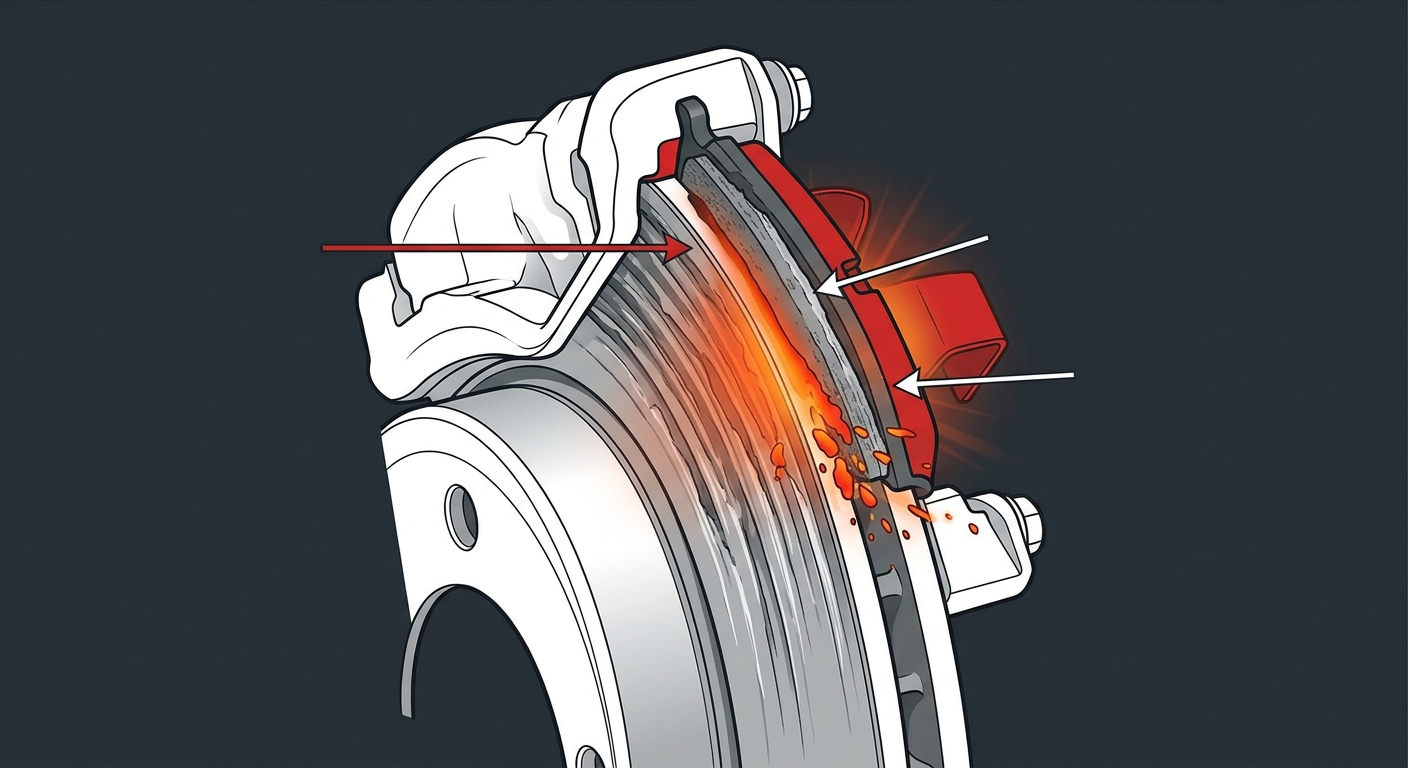
Driving with severely worn brake components is one of the most direct ways to compromise your safety on the road. When pads wear down completely, the friction material disappears, leaving only the steel backing plate to press directly against the cast-iron rotor. This metal-on-metal contact creates extreme heat, destroys the stopping surfaces, and significantly increases your stopping distance.
Ignoring the initial warning signs of brake wear can quickly turn a simple maintenance task into an expensive, extensive mechanical rebuild. When the friction material is gone, the metal backing plate gouges deep grooves into the rotor face, rendering it completely unusable. The intense heat generated by this friction can also damage the caliper pistons, melt the rubber dust boots, and cause the brake fluid to boil, which leads to a spongy pedal and a sudden loss of hydraulic pressure.
To prevent these dangerous situations, drivers should review our guide to spotting the signs of brake wear before major symptoms develop. When you begin to notice squealing, grinding, or a soft pedal, it is vital to have a professional technician inspect the system. If you are experiencing any of these issues, you can schedule a professional brake inspection at our service center to get a precise diagnosis.
For quick questions about scheduling or immediate safety concerns, you can reach our service advisors directly by giving us a quick call to discuss your vehicle. If you prefer to drop by for an inspection, you can find our service center location and get turn-by-step directions to our facility.
Table of Contents
- How to Spot Rotor Trouble Before Stopping Distance Changes
- Why Bedding New Brake Pads Matters Right Away
- When Pads Alone Make Sense and When Rotors Should Go Too
- Rotor Thickness, Resurfacing, and the Line Between Safe and Unsafe
- What Usually Wears Rotors Out Faster on Rural Roads
- Brake Service Planning for Drivers in Christiana and Lewisburg
- Answers to Common Brake Replacement Questions Before You Visit
- Get Expert Brake Service at Newton Chevrolet GMC
How to Spot Rotor Trouble Before Stopping Distance Changes
Identifying rotor issues early requires paying close attention to tactile and auditory feedback from your vehicle. The most common sign of a failing rotor is a distinct pulsating sensation in the brake pedal or a noticeable shudder in the steering wheel when slowing down from highway speeds. This vibration indicates that the rotor surface is no longer perfectly flat, causing the brake pads to bounce off the high and low spots as the wheel rotates.
You can also perform a quick visual inspection through the spokes of your wheels to check the health of your rotors. Healthy rotors should have a relatively smooth, shiny, and uniform silver finish. If you see deep concentric rings, heavy scoring, or a distinct blueish tint, the rotor has been subjected to extreme heat and needs attention. Dark rust bubbling on the outer edge or cooling vanes of the rotor is another indicator that the metal is degrading and losing its structural integrity.
When you bring your vehicle in for regular maintenance, our technicians inspect these components as part of our multi-point checklist. Combining a brake check with your routine oil change is an easy way to stay ahead of wear, and you can easily book your next maintenance appointment online. Taking care of these issues early prevents small vibrations from turning into major component failures.
If you are dealing with unexpected repair needs, we offer flexible payment solutions to keep your vehicle safe without straining your budget. You can learn about our service payment plans to see how to split the cost of parts and labor over time. At our dealership, we are committed to providing transparent, high-quality care, and you can discover how our service standards protect your investment every time you visit.
Why Bedding New Brake Pads Matters Right Away
When you install new brake pads and rotors, they do not immediately deliver their maximum stopping power. Bedding, also known as burnishing, is the critical process of mating the new pads to the new rotors. This procedure involves a series of controlled, progressive stops that heat the brake components, allowing a thin, uniform layer of friction material from the pad to transfer onto the smooth metal surface of the rotor.
What happens if you do not bed in your brakes? Failing to complete this process can lead to severe performance issues early in the life of your new parts. Without a proper bed-in cycle, the pad material transfers unevenly to the rotor face, creating microscopic high spots of friction material. Over time, these uneven deposits lead to a condition often misdiagnosed as a warped rotor, causing a persistent pedal pulsation, steering wheel shudder, and noisy operation.
To bed in a new set of brakes, find a safe, open stretch of road where you can perform several moderate decelerations without disrupting traffic. Accelerate to roughly 45 mph and apply firm, steady pressure to slow the vehicle down to about 10 mph, being careful not to bring the vehicle to a complete stop. Repeat this process roughly five times, then drive for several minutes without applying the brakes to allow the system to cool down completely.
For drivers who are towing heavy loads or driving larger vehicles, having fully bedded brakes is even more critical. If you are shopping for a capable truck or SUV, you can browse our new Chevrolet Silverado 1500 inventory to find a truck equipped with advanced trailering technologies. For maximum cabin space and heavy-duty stopping power, you can also explore our new Chevrolet Suburban models, which feature large, robust brake systems designed for demanding family road trips.
When Pads Alone Make Sense and When Rotors Should Go Too
A common question during brake service is whether you can replace just the brake pads while leaving the existing rotors in place. It is entirely acceptable to perform a pad-only replacement, often called a pad slap, if the rotors are in excellent condition. This means the rotors must have a smooth surface, show no signs of warping or deep scoring, and possess enough physical thickness to safely last through the lifespan of the new set of pads.
However, replacing only the pads on a worn, grooved, or glazed rotor is highly counterproductive. The new, flat brake pad will only contact the high points of a damaged rotor surface, reducing your overall braking surface area and severely compromising your stopping power. Additionally, the rough texture of an old rotor will act like sandpaper, wearing down your brand-new pads at an accelerated rate and causing squealing or grinding noises almost immediately.
Our technicians always measure the thickness and runout of your rotors to determine the safest course of action. If you are planning for future maintenance or considering upgrading your vehicle, you can submit a secure credit application online to see your options. If you have a specific model or configuration in mind that is not currently on our lot, you can use our personalized vehicle finder tool to let our team locate the perfect match for you.
Rotor Thickness, Resurfacing, and the Line Between Safe and Unsafe
Every brake rotor has a minimum thickness specification stamped directly onto its outer edge or inner hat. This measurement, known as the discard thickness, is the absolute limit of safety established by the manufacturer. If a rotor is worn down or machined below this specific thickness, it can no longer safely dissipate the extreme heat generated during braking, which can lead to rapid brake fade, cracking, or catastrophic structural failure.
Resurfacing, or turning rotors on a brake lathe, is the process of machining away a thin layer of the metal surface to restore a perfectly flat, smooth finish. This is a cost-effective alternative to replacement, but it is only possible if the rotor has enough remaining material. If the rotor is already close to its minimum limit, or if it has deep rust pitting and heavy scoring, resurfacing is not a safe option and the rotor must be replaced.
At our dealership, we use precision digital micrometers to measure your rotors at multiple points to ensure they are safe for continued use. If your vehicle needs major repairs or if you are considering trading it in, you can explore our competitive financing options to find a plan that fits your situation. For those looking for an excellent value on their next vehicle, you can also browse our current pre-owned vehicle specials to find a thoroughly inspected truck or SUV.
What Usually Wears Rotors Out Faster on Rural Roads
Driving habits and local road conditions play a massive role in how long your brake components last. On the rolling agricultural lands around Christiana, vehicles frequently encounter gravel roads, dust, and agricultural runoff. This fine grit and debris can easily get trapped between the brake pad and the rotor, acting as an abrasive that carves deep grooves into the metal and accelerates physical wear.
In addition to road debris, frequent towing and hauling over undulating terrain puts immense thermal stress on your braking system. When descending hills with a heavy trailer, the brakes must work significantly harder, raising rotor temperatures to extreme levels. This repeated heating and cooling cycle can warp the metal over time, leading to premature vibrations and a loss of stopping efficiency.
Keeping your chassis and suspension in proper alignment also helps prevent uneven brake wear by ensuring that your tires make consistent contact with the road. You can read about the importance of tire alignment to understand how it affects your overall handling and brake performance. For drivers interested in the latest driving assistance features, we can also help you explore GM Super Cruise technology to see how hands-free driving simplifies your daily commute.
Brake Service Planning for Drivers in Christiana and Lewisburg
Living in a rural community means relying heavily on your vehicle for daily commutes, farm work, and family trips. For residents in Lewisburg, commuting to local employment centers or driving near the historic downtown square involves a mix of highway driving and stop-and-go rural traffic. This varied driving pattern makes regular brake inspections essential to ensure your vehicle is always ready for the road.
To help keep your maintenance costs manageable, we offer rotating discounts on common wear items and diagnostic services. You can view our current service and parts specials online before booking your appointment to save on your next brake job. We also share helpful maintenance advice on our website, where you can find expert service and parts tips to help you maximize the lifespan of your pads and rotors.
If your vehicle requires unexpected repairs, we provide convenient financing options so you can get back on the road safely without delay. You can explore our service financing programs or complete an easy application to apply for repair financing directly through our website. Our factory-trained technicians are here to make sure your truck, SUV, or sedan stops exactly when you need it to.
Answers to Common Brake Replacement Questions Before You Visit
To help you prepare for your next service visit, we have gathered answers to some of the most common questions our technicians receive about brake maintenance.
Q: How long do brake pads and rotors typically last?
On average, brake pads last between 30,000 and 70,000 miles, while rotors can often last through two sets of pads if they remain within thickness specifications. However, your actual wear rate depends heavily on your driving habits, cargo weight, and road conditions.
Q: Why do my brakes squeak first thing in the morning?
A thin layer of surface rust often forms on iron rotors overnight due to humidity or dew. This moisture-induced rust is completely normal and is usually swept away safely during the first few stops of your morning drive.
Q: Can I use aftermarket brake pads on my Chevrolet or GMC?
While aftermarket pads are available, we highly recommend using genuine OEM parts. Original equipment parts are specifically engineered to match your vehicle’s weight and braking system, ensuring optimal stopping distance, minimal noise, and maximum durability.
Q: What does a soft or spongy brake pedal mean?
A spongy pedal usually indicates that air has entered the hydraulic brake lines, or that your brake fluid has degraded from moisture absorption and overheating. This is a critical safety concern that requires an immediate system flush and inspection.
Q: How long does a standard brake pad and rotor replacement take?
A professional brake replacement for a single axle typically takes between one and two hours. Our technicians will also perform a full inspection of the calipers, brackets, and fluid lines during this time to ensure the entire system is operating perfectly.
Get Expert Brake Service at Newton Chevrolet GMC
When it comes to maintaining your vehicle’s safety, you should never compromise on the quality of your parts or service. Our certified technicians have the training, specialized tools, and factory diagnostic equipment required to service your brake system correctly the first time. We use only high-quality materials designed specifically for your vehicle’s weight and performance requirements.
If you need replacement components, you can order genuine OEM parts directly through our parts department to ensure a perfect fit. For those looking to upgrade their overall ride quality and safety, you can also shop our selection of new tires designed to work seamlessly with your braking system.
Do not wait for your stopping distance to change before addressing your brake wear. You can contact our parts department to find the exact pads and rotors for your model, or visit our homepage to explore our full range of automotive services. Let our professional team keep your vehicle stopping safely on every road.
0 comment(s) so far on What Happens When Brakes and Rotors Are Left Too Long