



What Happens If Brake Fluid Is Not Changed?
What Happens If Brake Fluid Is Not Changed?
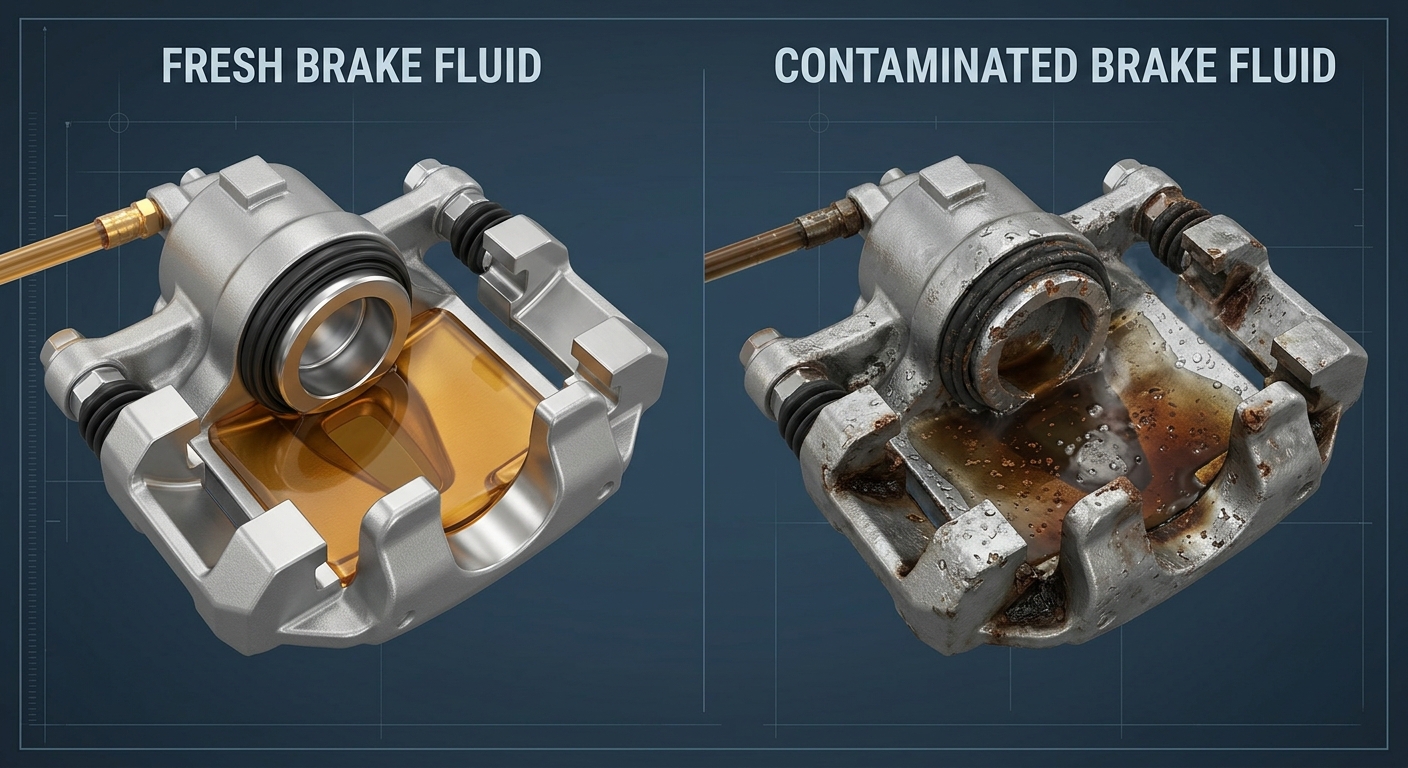
When brake fluid is not changed, it absorbs moisture from the atmosphere over time, significantly lowering its boiling point and allowing water to corrode internal hydraulic components. This absorbed moisture can boil during heavy braking, creating compressible steam bubbles that lead to a soft brake pedal, extended stopping distances, or temporary pedal loss. Neglected fluid also accumulates metallic debris and oxidized sludge that clog expensive anti-lock braking system valves and erode rubber master cylinder seals.
Hydraulic brake fluid operates in a closed system under extreme pressure, transferring the physical force from your foot directly to the brake pads at each wheel. Because glycol-based brake fluid is hygroscopic, it naturally attracts atmospheric water through flexible rubber brake hoses, master cylinder reservoir seals, and caliper piston seals. Within approximately two years of daily driving, fresh fluid typically absorbs 2% to 3% water by volume, which drastically alters its physical properties under heat.
Leaving contaminated fluid inside your vehicle leads to a progressive breakdown of hydraulic performance and severe physical damage to key brake components:
- Thermal Vapor Lock: As water content increases, fluid boiling temperatures drop significantly. Under hard braking, hot calipers turn the water into steam bubbles. Unlike liquid brake fluid, gas compresses, causing the pedal to drop to the floor without generating braking pressure.
- Internal ABS and ESC Module Corrosion: Dissolved moisture reacts with iron, aluminum, and copper inside the brake lines. Corroded metal sheds tiny particles into the fluid, forming a thick sludge that clogs the micro-valves inside the Anti-Lock Braking System (ABS) and Electronic Stability Control (ESC) hydraulic control unit.
- Piston and Seal Deterioration: Corrosive fluid pits the polished walls of brake calipers and wheel cylinders while drying out internal rubber seals, resulting in fluid leaks and stuck calipers.
- Increased Stopping Distance: Fluid contaminated with air bubbles or degraded chemistry cannot transfer pressure efficiently, forcing the driver to push harder and wait longer for the vehicle to slow down.
Routine fluid evaluations are an integral part of vehicle maintenance. Drivers can contact (931) 536-3120 to speak with a technician or visit our Shelbyville service center to inspect fluid clarity and moisture levels.
Table of Contents
- Why Is a Brake Fluid Exchange Important for Vehicle Safety?
- How Does Moisture in Brake Fluid Cause Internal System Corrosion?
- What Are the Symptoms of Old or Contaminated Brake Fluid?
- Can You Just Top Off Brake Fluid Instead of Exchanging It?
- How Often Should You Flush Brake Fluid on Chevrolet and GMC Models?
- Comparing DOT 3 vs DOT 4 Boiling Points and EV Maintenance Needs
- Common Questions About Brake Fluid Maintenance and Testing
- Protect Your Stopping Power with Expert Brake Fluid Service
Why Is a Brake Fluid Exchange Important for Vehicle Safety?
A complete brake fluid exchange is critical for vehicle safety because fresh fluid maintains an incompressible hydraulic link capable of generating thousands of pounds of stopping force instantaneously. Over time, heat cycles from emergency stops, mountain descents, and heavy towing break down protective chemical inhibitors inside the fluid. Without active corrosion inhibitors and stable thermal properties, your vehicle loses the consistent stopping power required to manage heavy loads safely.
Drivers hauling livestock or farm trailers across the rolling agricultural terrain around Christiana place intense thermal stress on their brake calipers, accelerating fluid heating during prolonged downhill braking. When truck owners ask our service technicians why pedal feel degrades under load, we explain how moisture accumulation slowly lowers fluid boiling resistance, turning a routine stop into a high-risk situation if the fluid boils.
Maintaining clean fluid is especially vital for commercial vehicles and heavy-duty trucks that operate near their gross vehicle weight ratings. Businesses evaluating new GMC commercial trucks rely on high-grade hydraulic systems designed to handle severe service schedules. Protecting these heavy-duty vehicles requires replacing degraded fluid before internal hydraulic pressure drops under stress.
Regular fluid service protects both safety and long-term vehicle equity. When owners review vehicle financing options for a long-term automotive investment, preserving expensive mechanical assemblies like ABS pumps and master cylinders through preventive maintenance prevents high out-of-pocket repair costs down the road.
How Does Moisture in Brake Fluid Cause Internal System Corrosion?
Moisture causes internal corrosion by entering the brake system through microscopic pores in rubber lines and reservoir vents, mixing directly with glycol-based fluid to create a weak acidic solution. Once water is dissolved inside the system, it reacts chemically with steel brake lines, cast-iron calipers, and copper alloy fittings. This chemical reaction breaks down the protective anti-corrosion additives blended into fresh fluid, initiating rapid metal oxidation from the inside out.
As corrosion develops, copper dissolves into the fluid first, acting as an early indicator of chemical degradation. Once copper levels spike, iron and aluminum components begin to rust and pit. The resulting rust particles mix with degraded fluid chemistry to form a dark, abrasive sludge that settles in the lowest points of the hydraulic circuit.
- Moisture Intrusion
- Additive Depletion
- Copper Dissolves
- Iron/Aluminum Pitting
- Sludge Accumulation
This abrasive sludge creates two distinct structural mechanical failures inside the brake system:
| Affected Component | Mechanism of Damage | Operational Consequence |
|---|---|---|
| ABS Hydraulic Valve Block | Microscopic rust debris lodges in solenoid valve seats | TCS and ABS failure, warning lights, stuck valves |
| Caliper Pistons & Bore Seals | Pitted metal tears internal rubber square-cut seals | External fluid leaks, stuck piston, uneven pad wear |
| Master Cylinder | Abrasive sludge scores primary and secondary piston seals | Brake pedal slowly sinks to floor at stoplights |
| Steel Brake Lines | Water settles in low line bends, rusting tubing internally | Pinhole hydraulic leaks and sudden pressure loss |
While tires maintain your vehicle’s physical connection to the asphalt—which drivers can check using our tire finder tool—the hydraulic system provides the physical force that stops those wheels from turning. Internal corrosion compromises that force long before a line leaks externally.
What Are the Symptoms of Old or Contaminated Brake Fluid?
A soft or spongy brake pedal that feels squishy underfoot is the most immediate warning sign of compromised hydraulic fluid. When moisture content in the fluid boils under normal operating temperatures, steam pockets form inside the brake lines. Because steam compresses under pressure while liquid does not, pedal force goes into squishing gas bubbles rather than pushing caliper pistons against the brake rotors.
Drivers should monitor their braking performance for several distinct indicators of fluid contamination:
- Spongy or Low Brake Pedal: The pedal offers little initial resistance and travels much closer to the floorboard than usual before engaging the brakes.
- Sinking Pedal at Red Lights: Holding steady pressure on the brake pedal while stopped causes the pedal to creep slowly downward, indicating fluid slipping past worn, corroded master cylinder internal seals.
- Increased Stopping Distances: The vehicle requires considerably more road distance to come to a complete standstill during routine braking scenarios.
- Dark, Opaque, or Cloudy Fluid: Fresh brake fluid is clear with a light amber tint. Fluid that appears dark brown, black, or cloudy contains heavy particulate contamination, moisture, and metal corrosion.
- Burning Smell After Hard Stops: A harsh chemical odor after heavy braking indicates the fluid has reached its thermal limit and is breaking down under heat.
- ABS Warning Light Illumination: Debris or rust particles inside the hydraulic control unit can trip pressure sensors, illuminating the dashboard ABS or brake system warning indicator.
For commuters traversing rural routes around Lewisburg, sudden stops behind farm machinery highlight why maintaining clean fluid and immediate pedal response is essential for daily safety.
Can You Just Top Off Brake Fluid Instead of Exchanging It?
Topping off a low brake fluid reservoir replaces lost fluid volume, but it leaves contaminated fluid and dissolved moisture trapped throughout the lines and calipers. Adding fresh fluid to the plastic reservoir on top of the master cylinder does not flush out the old, moisture-laden fluid sitting down in the calipers where braking heat is highest.
Brake fluid levels naturally drop as brake pads wear down. As friction material thins, caliper pistons extend further outward to push the pads against the rotor, drawing fluid out of the reservoir to fill the extra space inside the caliper bores. Simply filling the reservoir back to the “Full” line masks this natural indicator and can cause the reservoir to overflow when new, thicker brake pads are eventually installed and the pistons are pushed back in.
A complete brake fluid exchange uses specialized pressure-bleeding equipment to force fresh, pure fluid through the master cylinder, through every foot of hydraulic line, and out through each caliper bleeder valve. This process completely purges trapped air, water, copper deposits, and oxidized sludge from the entire system rather than diluting dirt in the reservoir.
How Often Should You Flush Brake Fluid on Chevrolet and GMC Models?
Factory maintenance schedules specify a complete brake fluid replacement roughly every 45,000 miles or 3 years, whichever occurs first. Because glycol fluid absorbs moisture continuously regardless of mileage, time is just as critical as odometer distance when evaluating fluid condition.
Chevrolet and GMC service guidelines mandate a professional multipoint brake inspection every 7,500 miles or 6 months. During this routine service, certified technicians inspect brake pad thickness, check hydraulic lines for external leaks, and test the fluid’s chemical composition and moisture content.
| Routine Inspection | Every 7,500 Miles / 6 Months |
| Full System Flush | Every 45,000 Miles / 3 Years |
| Immediate Replacement | Moisture Content ≥ 3% by Volume |
Vehicles subjected to severe operating conditions—such as frequent trailering, mountain driving, commercial hauling, or prolonged idling in humid environments—may require fluid replacement closer to every 30,000 miles or 2 years. Once digital test meters show fluid water saturation reaching 3% moisture content, an immediate fluid exchange is necessary to restore safety margins.
Comparing DOT 3 vs DOT 4 Boiling Points and EV Maintenance Needs
Chemical composition dictates how different glycol-based brake fluids withstand extreme thermal buildup during heavy braking. Federal Motor Vehicle Safety Standards establish clear minimum boiling thresholds for both DOT 3 and DOT 4 formulations, divided into dry boiling points (zero moisture) and wet boiling points (approximately 3.7% water contamination by volume).
| Fluid Specification | Minimum Dry Boiling Point | Minimum Wet Boiling Point | Typical Base Application |
|---|---|---|---|
| DOT 3 | 205°C (401°F) | 140°C (284°F) | Standard passenger cars, light trucks |
| DOT 4 | 230°C (446°F) | 155°C (311°F) | Heavy-duty trucks, performance vehicles, EVs |
DOT 4 fluid incorporates borate esters, which chemically bind with free water molecules to maintain a higher boiling point as moisture enters the system. However, DOT 4 absorbs water at a faster initial rate than DOT 3, making strict adherence to time-based flush intervals critical. Always consult your owner’s manual; while DOT 4 can often be used in systems specifying DOT 3, mixing fluid types must strictly align with manufacturer recommendations.
Electric vehicles (EVs) also rely heavily on hydraulic brake fluid. Although EVs utilize regenerative braking to slow the vehicle using the electric motor, traditional hydraulic brakes engage during hard stops and emergency maneuvers. Because EV friction brakes are used less frequently, calipers accumulate moisture and rust faster if the hydraulic fluid is neglected. Time-based fluid flushes every 2 to 3 years remain mandatory for electric vehicles to prevent internal hydraulic unit corrosion.
Common Questions About Brake Fluid Maintenance and Testing
Q: How do technicians test brake fluid to see if it needs changing?
Technicians evaluate brake fluid using optical refractometers, electronic boiling point testers, or chemical test strips. Electronic testers heat a small fluid sample to determine its actual boiling temperature, while chemical strips measure dissolved copper levels in parts per million. A copper concentration exceeding industry thresholds or a measured water content of 3% moisture content or higher indicates the fluid’s corrosion inhibitors are depleted and requires an immediate system flush.
Q: Can I mix DOT 3 and DOT 4 brake fluid in my vehicle?
While DOT 3 and DOT 4 are both glycol-ether based and chemically compatible, mixing them lowers the overall boiling point to the level of the weaker fluid. DOT 4 offers higher heat resistance but absorbs atmospheric moisture more rapidly. You should never replace DOT 4 with DOT 3 if your owner’s manual mandates the higher specification, as doing so reduces thermal protection under heavy braking loads.
Q: Why is my brake fluid reservoir full if my brakes feel soft?
A full reservoir only indicates fluid volume, not fluid quality or system pressure integrity. If moisture inside the lines has boiled into compressible steam, or if air has entered the system through a worn seal, the pedal will feel soft and spongy even with a completely full fluid reservoir. A soft pedal can also signal internal master cylinder seal leakage, where fluid bypasses the internal pistons without creating hydraulic line pressure.
Q: Does brake fluid maintenance affect other chassis systems?
Neglecting brake fluid can lead to uneven braking force, which accelerates irregular tire wear and puts extra strain on suspension components. If a caliper sticks due to internal corrosion sludge, the constant drag heats up the wheel hub and tire. Keeping your braking system clean works alongside regular wheel alignment service guide recommendations to preserve overall drivability, steering response, and tire longevity.
Q: How long does a professional brake fluid flush take?
A professional brake fluid flush typically takes between 45 to 60 minutes when performed by trained technicians using dedicated pressure-bleeding equipment. The process involves draining the reservoir, pressure-flushing fresh fluid through all four hydraulic circuits, bleeding air from each caliper, and testing pedal firmness. Drivers can easily pair this service when they schedule a brake inspection alongside a routine oil change.
Protect Your Stopping Power with Expert Brake Fluid Service
Maintaining fresh hydraulic fluid is the single most cost-effective way to preserve braking performance and protect internal system components from costly corrosion. Replacing degraded fluid every three years or 45,000 miles ensures your vehicle delivers sharp, reliable pedal response every time you step on the brakes.
Our factory-certified service team is equipped with specialized testing tools and genuine OEM brake fluids to keep your vehicle performing at its best. Contact our service advisors directly at (931) 536-3120 or visit our Shelbyville location today to reserve your next multi-point inspection and brake fluid exchange.
0 comment(s) so far on What Happens If Brake Fluid Is Not Changed?