



The Real Deal on Brake Fluid Compatibility and Safety
The Real Deal on Brake Fluid Compatibility and Safety
When you need professional help assessing your hydraulic system, our certified technicians are ready to assist. You can reach out to our service team by giving us a quick call at (931) 536-3120 to discuss any changes in your pedal resistance. If you prefer an in-person consultation, you can easily get directions to Newton Chevrolet GMC and stop by our service lane. For those driving advanced electric models, we also help owners schedule a Chevy EV test drive to experience how modern regenerative systems interact with traditional hydraulics. When it is time for a system refresh, you can quickly schedule brake service online to keep your stopping power sharp.
Table of Contents
- Can DOT 4 Go Into a DOT 3 System Safely?
- What Old Brake Fluid Does Inside the Brake System
- How Often Brake Fluid Should Be Exchanged on Modern Vehicles
- What We Check During a Brake Fluid Service
- Keeping Brake Maintenance Simple for Local Drivers
Can DOT 4 Go Into a DOT 3 System Safely?
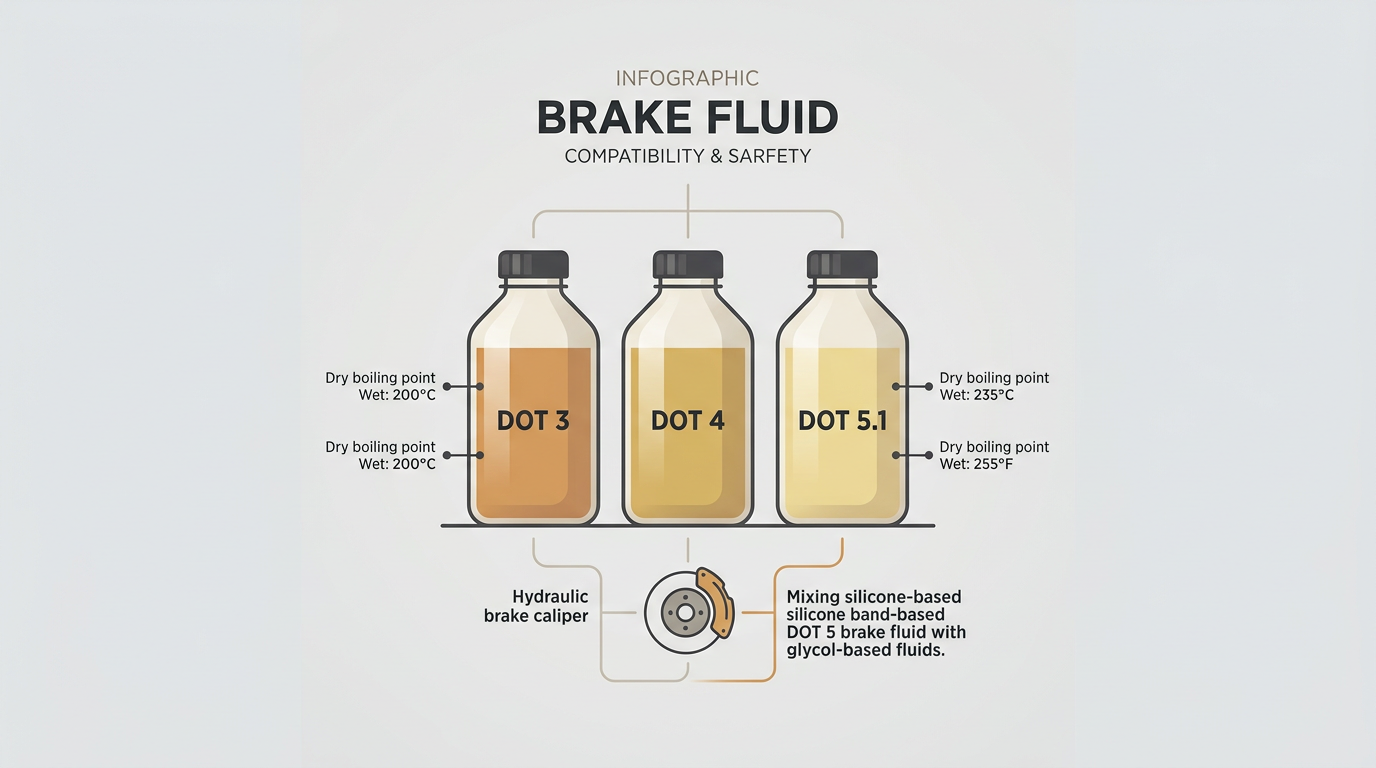
The question we hear most often in our service bays is whether you can use DOT 4 fluid in a system that originally specified DOT 3. The short answer is yes, you can safely use DOT 4 brake fluid in a vehicle designed for DOT 3. Both fluids are glycol-ether based, meaning they share a compatible chemical foundation that allows them to mix without damaging internal rubber seals or metal lines. Upgrading to DOT 4 actually provides a performance benefit because it features a higher boiling point, which offers an extra margin of safety under heavy braking loads.
While mixing them is chemically safe, you should understand the physical differences between these classifications. The Department of Transportation sets strict standards for boiling points, categorized into dry and wet measurements. The dry boiling point refers to fresh fluid straight from a sealed container, while the wet boiling point measures performance after the fluid has absorbed roughly three percent water by volume.
- DOT 3 fluid requires a minimum dry boiling point of 401°F and a minimum wet boiling point of 284°F.
- DOT 4 fluid raises those standards to a minimum dry boiling point of 446°F and a minimum wet boiling point of 311°F.
While you can put DOT 4 into a DOT 3 system, you should never do the reverse. Putting DOT 3 into a system that requires DOT 4 can lead to dangerous brake fade because the lower boiling point fluid may boil under the high-temperature conditions the vehicle’s engineers anticipated. When sourcing maintenance supplies, our team can help you order genuine OEM parts to ensure you get the exact specification your vehicle requires. We also help drivers find tires for your vehicle to maintain maximum grip on the road, and we invite you to learn about financing options for larger maintenance and repair packages.
What Old Brake Fluid Does Inside the Brake System
Over time, glycol-based brake fluids act like a sponge because they are highly hygroscopic, meaning they actively absorb moisture from the surrounding atmosphere. This moisture enters the system through microscopic pores in the flexible rubber brake hoses, master cylinder reservoir seals, and caliper piston boots. As water content accumulates in the lines, it directly lowers the boiling point of the fluid, bringing it closer to the wet boiling standards. Under heavy braking, this trapped moisture can flash into steam, which is highly compressible and results in a soft, spongy brake pedal that requires you to pump the brakes to slow down.
Beyond the immediate threat of brake fade, moisture accumulation triggers internal corrosion throughout your hydraulic components. Water reacts with the steel lines, aluminum pistons, and cast-iron calipers to form rust and debris. This debris eventually turns into a dark sludge that can clog the incredibly tight valves inside modern Anti-lock Braking Systems (ABS) and Electronic Stability Control (ESC) modules. For drivers navigating the rural highways around Lewisburg, where sudden stops for farm equipment or wildlife are common, a responsive ABS modulator is critical for maintaining steering control during emergency maneuvers.
Preventing this internal decay requires using high-quality components and fresh fluid. If you prefer to handle minor garage tasks yourself, you can order genuine parts online directly from our warehouse. Our service center also helps you shop new tires to complement your healthy braking system with fresh rubber. For comprehensive system restorations or unexpected mechanical repairs, you can get pre-approved for financing online to keep your vehicle safe without delaying necessary maintenance.
How Often Brake Fluid Should Be Exchanged on Modern Vehicles
Most automotive manufacturers recommend performing a complete brake fluid exchange every two to three years or every 20,000 to 45,000 miles, regardless of how often the vehicle is driven. Because moisture absorption is a constant environmental process, the fluid degrades over time even if the car sits parked in a garage. Ignoring this interval can lead to premature failure of expensive hydraulic components, turning a simple maintenance item into a major mechanical overhaul.
Different vehicle classes and driving habits can also influence how quickly your fluid needs attention. Heavy-duty trucks and large family haulers demand careful monitoring due to the sheer mass they must bring to a halt. If you drive a model from our premium lineup, such as when you shop new GMC Yukon inventory or look to shop new GMC Yukon XL inventory, the hydraulic system manages significant weight, especially when fully loaded. The same standard applies when you choose to shop new Chevrolet Suburban inventory or shop new Chevrolet Tahoe inventory for family road trips.
For smaller, efficient commuters, the thermal demands might be lower, but regular intervals remain crucial. Whether you decide to shop new Chevrolet Trax inventory, shop new Chevrolet Trailblazer inventory, or shop new GMC Terrain inventory, keeping the fluid clean protects the delicate electronic braking sensors. The same care is required when you shop new Chevrolet Traverse inventory or shop new GMC Acadia inventory for daily school runs.
Truck owners who tow heavy trailers require frequent fluid inspections to prevent overheating. When you shop new Chevrolet Silverado inventory, including specialized work trucks like when you shop new Chevrolet Silverado 1500 inventory or shop new Chevrolet Silverado 2500 inventory, the fluid undergoes immense pressure during trailering. This high-heat environment is also present for those who shop new Chevrolet Silverado 3500 inventory or utilize heavy-duty commercial setups when they shop new Chevrolet Silverado HD inventory. From medium-duty options where you shop new Chevrolet Silverado 4500 HD inventory, shop new Chevrolet Silverado 5500 HD inventory, and shop new Chevrolet Silverado 6500 HD inventory, to chassis cabs where you shop new Chevrolet Silverado 3500 Chassis Cab inventory, clean fluid is vital.
The same rule applies to the GMC truck lineup. Whether you shop new GMC Sierra 1500 inventory or step up to shop new GMC Sierra HD inventory, the brakes are engineered to handle maximum payloads, but only when the hydraulics are pristine. Midsize truck owners who shop new Chevrolet Colorado inventory or shop new GMC Canyon inventory for off-road weekend adventures should also check their reservoirs for dirt and water contamination after driving through muddy trails or creek crossings.
Even commercial fleets and specialty vans require regular fluid flushes to maintain uptime. When business owners shop new GMC Savana inventory, including passenger configurations to shop new GMC Savana Passenger inventory, cutaways to shop new GMC Savana Cutaway inventory, or cargo models to shop new GMC Savana Cargo inventory, they rely on hydraulic reliability for daily deliveries. This holds true for those who shop new Chevrolet Express Passenger inventory, shop new Chevrolet Express Cutaway inventory, or shop new Chevrolet Express Cargo inventory for commercial routes.
From low cab designs where you shop new Chevrolet Low Cab Forward inventory to specialized business fleets where you shop new commercial inventory, keeping the fluid fresh prevents costly road breakdowns. Even advanced electric delivery platforms, such as when you shop new BrightDrop inventory, shop new BrightDrop 600 inventory, or shop new BrightDrop 400 inventory, rely on hydraulic backup systems that require regular fluid exchanges.
No matter what you drive, from performance cars where you shop new Chevrolet Corvette inventory, shop new Chevrolet Corvette Z06 inventory, or shop new Chevrolet Corvette ZR1 inventory, to daily crossovers where you shop new Chevrolet Equinox inventory or shop new Chevrolet Blazer inventory, keeping up with maintenance is simple. You can easily browse new inventory, check out our browse new Chevrolet inventory options, or view the browse new GMC showroom online. If you have a specific configuration in mind, let us find your vehicle for you, and be sure to check our browse new vehicle specials before visiting. You can also review our commercial vehicle inventory online or schedule your oil change to combine your routine services into a single visit.
What We Check During a Brake Fluid Service
When you bring your vehicle to our service lane, we perform a comprehensive diagnostic inspection of your entire hydraulic system. We do not just look at the fluid level in the reservoir; we use specialized electronic testers to measure the exact moisture content and copper levels within the fluid. This scientific approach allows us to determine if the fluid has degraded to a point where its boiling threshold is compromised, giving you clear, data-driven feedback on the health of your brakes.
Our technicians also inspect the physical components of the braking system to identify potential entry points for moisture and dirt. This includes checking the master cylinder cap seal for cracks, examining the rubber brake lines for dry rot, and looking for fluid leaks around the calipers and wheel cylinders. To help you plan your visit, you can view service and parts specials on our website to find current savings on hydraulic maintenance. We also provide a library of expert advice where you can view service and parts tips to better understand your vehicle’s mechanical needs.
If your vehicle requires unexpected repairs during the inspection, we offer convenient ways to manage the cost. You can explore service financing options to break up the payments over time, or directly apply for service financing through our secure online portal. While your car is on the lift, our team can also perform other critical preventative tasks, such as checking your electrical system when you schedule battery service to ensure reliable starting power in all seasons.
Keeping Brake Maintenance Simple for Local Drivers
Maintaining your vehicle’s stopping power should never be a stressful experience. Our factory-trained technicians understand the specific demands that local driving puts on your vehicle, whether you are hauling equipment through the rural areas of Fayetteville or commuting daily on regional highways. By using original equipment parts and following precise manufacturer guidelines, we ensure that your hydraulic system performs exactly as the engineers intended, giving you peace of mind on every journey.
If you suspect your brake pedal is losing its firm feel, or if it has been more than two years since your last system flush, we are here to help. You can easily get directions to Newton Chevrolet GMC to have our team perform a quick, professional fluid analysis. For immediate answers about parts compatibility or scheduling availability, feel free to give our service counter a quick call. If you prefer to consult with our parts specialists about specific fluid grades, you can also contact our parts department directly to get the exact products recommended for your vehicle.
0 comment(s) so far on The Real Deal on Brake Fluid Compatibility and Safety