



How Often Should a Transmission Fluid Exchange Be Performed?
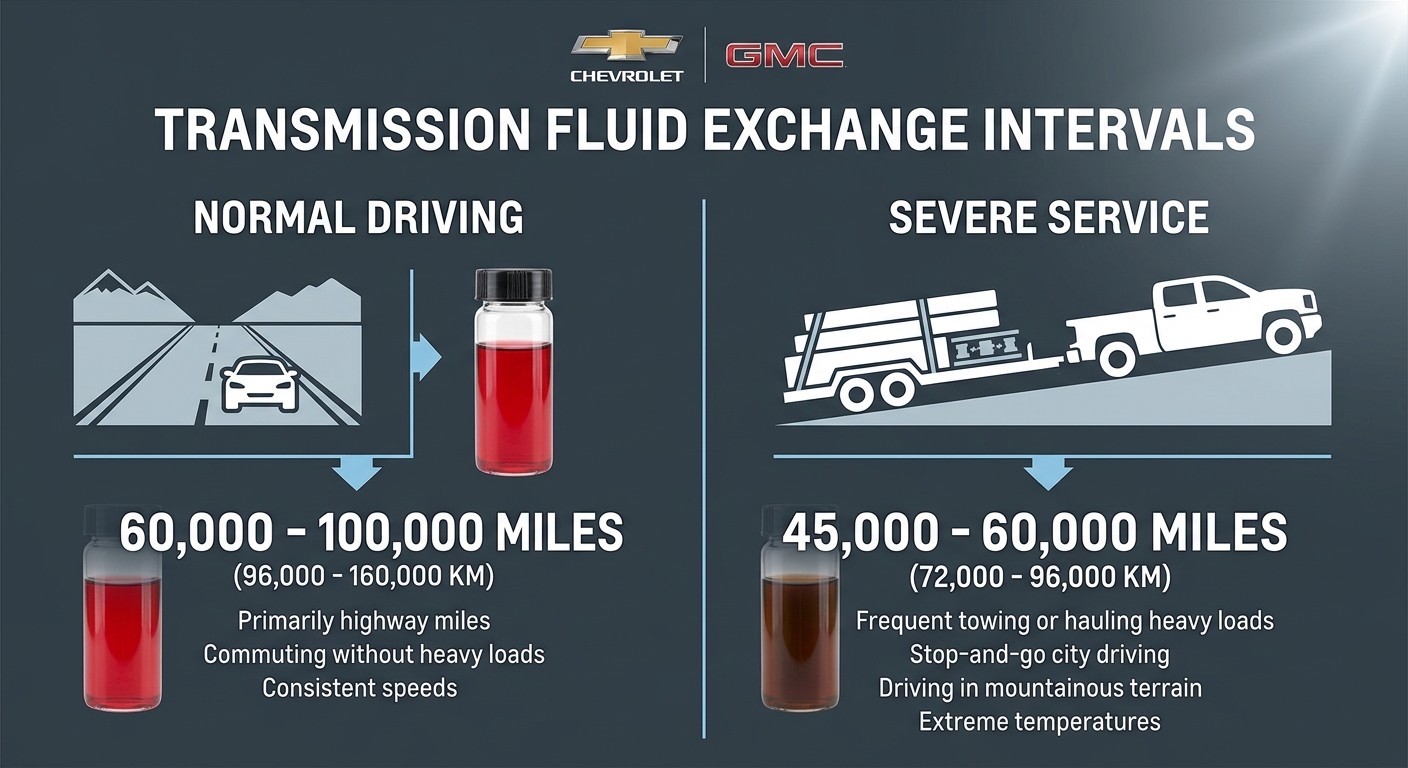
For most automatic vehicles, a complete transmission fluid exchange should be performed every 60,000 to 100,000 miles under normal driving conditions. However, vehicles subjected to severe service—such as regular trailering, heavy payload hauling, or frequent stop-and-go driving—require fluid exchanges every 45,000 to 60,000 miles to prevent fluid thermal breakdown, internal clutch slipping, and valve body wear.
Automotive transmissions operate under extreme hydraulic pressure and internal friction. Over time, the protective additives in automatic transmission fluid degrade, reducing its ability to transfer power, lubricate planetary gears, and dissipate engine heat. Under GM severe service maintenance schedules, trucks and SUVs fitted with a six-speed automatic transmission or modern eight- and ten-speed units require fluid inspection and service around 45,000 miles. Heavy-duty trucks using Dexron VI fluid or equipped with an Allison 1000 transmission and Duramax diesel engine often call for fluid and filter service at 50,000-mile intervals when frequently pulling loaded trailers.
Driving habits and regional conditions heavily influence how quickly transmission fluid breakdown occurs. For drivers navigating agricultural routes around Christiana, frequent stop-and-go farm work, towing livestock trailers, and traveling over hilly terrain generate elevated operating temperatures inside the torque converter. When transmission fluid overheats beyond its designed operating threshold, oxidation accelerates, causing varnish buildup on shift solenoids and premature clutch material erosion.
Adhering to severe service intervals protects your vehicle’s driveline longevity and preserves shifting performance. If you are unsure whether your vehicle’s driving history calls for a standard or severe maintenance interval, our Shelbyville service department location can inspect your fluid’s color and viscosity, or you can speak directly with a certified technician by giving our team a quick call to discuss your mileage history.
Table of Contents
- What Is a Transmission Fluid Exchange and How Does It Differ From a Flush?
- Do New Vehicles and Modern Transmissions Still Need Fluid Exchanges and Filter Replacements?
- What Are the Warning Signs, Fluid Colors, and Symptoms of Degraded Transmission Fluid?
- How Long Does the Service Take and Can Dirty Fluid Cause Engine Lights or Burnt Smells?
- Frequently Asked Questions About Transmission Fluid Maintenance
- Schedule Your Transmission Maintenance at Newton Chevrolet GMC
What Is a Transmission Fluid Exchange and How Does It Differ From a Flush?
A transmission fluid exchange uses the vehicle’s internal fluid pump to swap old lubricant for fresh fluid throughout the entire transmission system, including the torque converter, fluid lines, and transmission cooler. Unlike a traditional drain-and-fill that empties only the transmission pan—leaving up to 70% of dirty fluid trapped inside internal cavities—or a high-pressure flush that forces chemical solvents through sensitive valves, an exchange cleanly replaces nearly 100% of degraded fluid without harsh external pressure.
Understanding the mechanical distinction between service methods helps owners choose the safest maintenance path for their drain train:
- Drain and Fill: A technician removes the transmission pan plug, draining roughly 3 to 5 quarts of fluid located in the reservoir. While this allows for pan cleaning and filter replacement, fresh fluid immediately mixes with leftover dirty fluid trapped in the torque converter and cooler lines upon startup.
- Fluid Exchange: Professional exchange equipment connects directly to the transmission cooling lines. As the engine runs, the transmission’s own internal pump pushes dirty fluid out into an evacuation tank while drawing new, clean fluid in at an identical flow rate. This process exchanges virtually all old fluid without pressure surges.
- High-Pressure Chemical Flush: External flush machines introduce pressurized cleaning solvents into the system to break up heavy sludge. While effective at removing deposits, high-pressure flushes risk dislodging debris that can clog delicate passages in the valve body or damage internal rubber seals.
Choosing a fluid exchange over a chemical flush ensures that your hydraulic system receives clean fluid without exposing friction plates and shift solenoids to aggressive solvents. Maintaining clean hydraulic fluid protects clutch pack engagement and prevents slippage under load. For vehicle owners balancing routine service costs across multiple vehicles, setting up flexible service financing options helps keep scheduled driveline care manageable alongside routine household budgeting.
Do New Vehicles and Modern Transmissions Still Need Fluid Exchanges and Filter Replacements?
Modern vehicles equipped with “sealed” transmissions still require fluid exchanges and filter maintenance because thermal stress and internal friction degrade transmission fluid over time regardless of dipstick design. Factory labels claiming “filled for life” apply only to normal driving under mild conditions, whereas heavy trailering, commercial utility work, and extreme ambient heat significantly shorten fluid lifespans.
Engineers design late-model trucks, such as those powered by the TurboMax engine or high-output V8 configurations, to operate under demanding torque loads. When hauling cargo or pulling trailers across long stretches, transmission oil temperatures rise rapidly. Over thousands of miles, friction material from clutch packs wears down into fine micro-particles suspended within the fluid. Even in sealed units, this debris eventually recirculates through the valve body, causing sticky solenoid movement and delayed gear engagement.
Filter service access depends heavily on internal transmission geometry:
- Pan-Mounted Filters: Found in many traditional automatic transmissions, these filters sit directly above the oil pan. Technicians drop the pan during service to replace the filter element, clean magnetic collection traps, and re-seal the pan gasket.
- Internal / Non-Servicable Filters: Certain modern multi-speed automatics position internal filters deep within the main housing case, making replacement impossible without a full transmission teardown. On these models, regular fluid exchanges are even more critical, as fresh fluid is the only defense against debris accumulation.
For commercial operators and fleet owners in Lewisburg carrying daily tools, materials, and heavy equipment along the Natchez Trace Parkway corridor, keeping transmission fluid fresh prevents costly commercial downtime. If you manage work vehicles, reviewing our line of new Chevrolet commercial trucks offers insight into modern driveline capabilities, while contacting our parts department directly ensures you obtain OEM-certified transmission filters and fluid specifications for your fleet.
What Are the Warning Signs, Fluid Colors, and Symptoms of Degraded Transmission Fluid?
Healthy automatic transmission fluid appears translucent bright red to light pink with a mild oily scent, whereas severely degraded fluid turns dark brown or black and emits a strong burnt odor. Recognizing changes in fluid coloration and mechanical driving behavior allows vehicle owners to address transmission breakdown before internal component failure occurs.
Fluid condition progresses through distinct visual and physical stages:
- Translucent Bright Red: New, fully functional fluid loaded with active anti-wear, anti-foaming, and friction-modifying additives.
- Dark Red / Light Brown: Normal mid-life aging; the fluid remains functional but shows minor thermal discoloration from routine operation.
- Dark Brown / Black: Oxidized and thermally degraded fluid that has lost its protective viscosity and hydraulic transfer efficiency.
- Burnt Smell: Signifies extreme overheating where friction linings have scorched, requiring an immediate fluid exchange and system inspection.
Drivability symptoms companioning dirty or low transmission fluid include gear slippage during acceleration, harsh gear hunting, delayed engagement when shifting into Drive or Reverse, and audible chatter or shuddering under heavy torque load. Drivers bringing trucks in for shift hesitation often expect a solenoid failure, but fresh fluid restores hydraulic pressure across the valve body when addressed before clutch pack damage occurs. If fluid puddles appear underneath the front axle or frame rails, inspecting transmission oil cooler lines and pan seals prevents severe fluid starvation while driving.
How Long Does the Service Take and Can Dirty Fluid Cause Engine Lights or Burnt Smells?
A professional transmission fluid exchange typically takes 60 to 90 minutes to complete, during which certified technicians evacuate oxidized fluid, refill the system with precise OEM-grade lubricant, and perform electronic temperature-matching checks. Severely degraded fluid causes internal clutch friction that generates intense heat, producing burnt smells and triggering engine diagnostic trouble codes related to gear ratio errors and solenoid operation.
When transmission fluid loses its cooling properties, fluid temperatures inside the torque converter can exceed safe operating limits. This thermal stress causes internal fluid shearing, reducing line pressure across the valve body. The vehicle’s Powertrain Control Module continuously monitors shift timing and pressure switch responses; when shift delays cross factory thresholds, the computer sets diagnostic trouble codes—such as P0700 powertrain codes—and illuminates the check engine light.
Combining transmission care with broader vehicle maintenance minimizes service visits and protects overall vehicle safety. While your vehicle is on the service rack for fluid evacuation, technicians can evaluate complete vehicle safety systems, including checking brake pad thickness during routine service and scheduling battery diagnostic service to confirm electrical charging reliability before winter or summer travel.
Frequently Asked Questions About Transmission Fluid Maintenance
Q: How do I check the fluid level on a modern transmission without a dipstick?
Modern sealed transmissions utilize a check-plug or standpipe mechanism located inside the transmission pan rather than a traditional top-mount dipstick. To check fluid levels accurately, a technician elevates the vehicle on a level lift, connects a diagnostic scan tool to verify that transmission fluid temperature is within factory specification, and removes the level plug. If fluid trickles out slowly at operating temperature, the reservoir is full; if no fluid drains, fresh fluid must be added using a specialized fill adapter.
Q: Will changing dirty fluid cause a high-mileage transmission to start slipping?
Changing dirty fluid does not cause a healthy transmission to slip, but if an severely worn transmission is already experiencing clutch pack degradation, varnish buildup and suspended friction particles in dirty fluid may be artificially maintaining clutch grip. In cases where fluid has turned pitch black and smells severely burnt after years of neglect, a technician should inspect the transmission pan for heavy metal debris before performing a fluid service, as friction plates may already be worn past operational limits.
Q: What is the difference between synthetic Dexron VI and standard fluid?
Synthetic Dexron VI fluid features refined base oils paired with engineered additive packages that resist oxidation, thermal shearing, and sludge formation far better than conventional fluids. Designed for modern multi-speed transmissions, synthetic formulations maintain stable hydraulic viscosity across extreme cold and hot operating temperatures, maintaining precise solenoid shifting and torque converter lockup across demanding duty cycles.
Q: Does skipping scheduled transmission maintenance void my factory warranty?
Skipping manufacturer-recommended maintenance intervals can jeopardize warranty coverage if a transmission component fails due to fluid contamination, thermal breakdown, or fluid starvation. Warranty claims require documentation proving required maintenance was completed; keeping detailed service records for scheduled fluid exchanges protects your Powertrain Limited Warranty coverage throughout its term.
Q: What other maintenance checks should be done during a transmission fluid service?
When performing a transmission fluid service, technicians should inspect transmission cooler lines for leaks, examine universal joints or CV boots on drive shafts, and verify transfer case fluid condition on four-wheel-drive vehicles. It is also an ideal time for understanding tire alignment benefits to ensure uneven tire drag is not placing unnecessary mechanical stress on your vehicle’s drivetrain.
Schedule Your Transmission Maintenance at Newton Chevrolet GMC
Regular transmission fluid exchanges protect your vehicle’s torque converter, valve body, and internal gearsets from thermal degradation and expensive mechanical failures. Adhering to manufacturer maintenance schedules ensures smooth shift engagement, optimal fuel efficiency, and long-term drivetrain dependability whether you use your vehicle for daily commuting, towing, or commercial work.
Our factory-trained service team uses specialized fluid exchange equipment and genuine OEM-specified fluids engineered specifically for your Chevrolet or GMC powertrain. To inspect your transmission fluid condition or schedule your next service interval, visit our Shelbyville service center location at 2006 N Main St, Shelbyville, TN 37160 or give our service department a call at (931) 536-3120 today to set up your appointment.
0 comment(s) so far on How Often Should a Transmission Fluid Exchange Be Performed?