



How Do Engine Size and Axle Ratio Affect a Used Truck’s Towing Capacity?
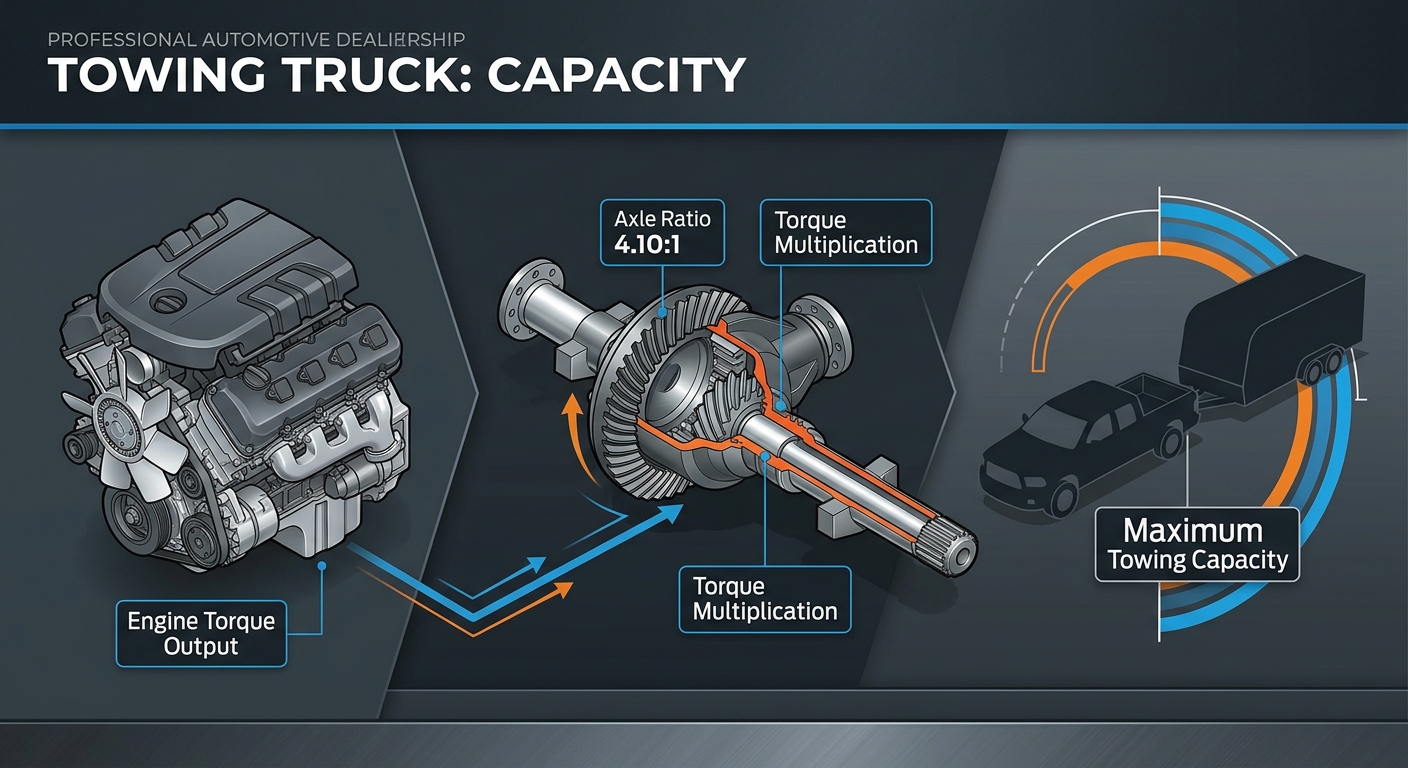
Engine size determines raw horsepower and torque output, while a higher numerical axle ratio multiplies that engine torque to move heavier loads from a dead stop. A larger engine combined with a tow-oriented rear axle ratio maximizes a used truck’s tow rating, whereas a smaller engine or highway-geared axle restricts towing capacity even on identical chassis configurations.
When evaluating a used pickup, torque dictates how easily a vehicle accelerates with a trailer, while axle ratios determine mechanical leverage. For example, a rear axle ratio of 3.73:1 or 4.10:1 delivers significantly more pulling power at the drive wheels than a highway-friendly 3.23:1 ratio paired with the exact same motor. The trade-off comes down to operating revolutions per minute; numerical higher gears keep the engine in its optimal torque band during heavy pulls, while numerical lower gears reduce engine speed on the highway to conserve fuel.
Configuration details alter these ratings substantially across similar body styles. A pre-owned Chevrolet Silverado 1500 equipped with the 3.0L Duramax I-6 turbo-diesel engine, 4×2 drivetrain, crew cab, and the factory Max Trailering Package achieves a maximum conventional towing capacity of 13,300 lbs. Without that specific differential ratio and cooling upgrades, a visually identical Silverado might cap out closer to 8,700 lbs.
Drivers hauling livestock trailers or farm machinery around Christiana need to verify the specific axle code and factory options rather than relying on general model overviews. You can confirm these exact ratings by checking the door-jamb weight label on the vehicle or by (931) 536-3120 and giving our team a quick call to pull the original build sheet. If you want to inspect a truck in person, stop by for a test drive after visiting our Shelbyville showroom on North Main Street.
Table of Contents
- Which Used Trucks Offer the Highest Reliability and Lowest Maintenance Costs?
- How Many Miles Is Too Many for a Used Gas or Diesel Truck?
- What Should You Look for During a Used Truck Physical Inspection?
- How Do Drivetrain, Age, and Market Trends Impact Used Truck Valuation?
- Common Questions About Buying a Used Pickup Truck
- Visit Newton Chevrolet GMC for Your Next Used Pickup
Which Used Trucks Offer the Highest Reliability and Lowest Maintenance Costs?
Full-size pickups featuring naturally aspirated V8 engines or commercial-grade inline-diesel engines deliver exceptional long-term reliability and predictable upkeep costs when routine fluid schedules are maintained. Midsize options equipped with modern turbocharged four-cylinder engines provide lower initial costs and simpler routine service for buyers requiring lighter payload utility.
Maintaining a pre-owned truck comes down to component durability and component accessibility. Proven V8 engines, such as the 6.2L V8 found in properly equipped GMC Sierra 1500 models, offer robust internals capable of conventional towing up to 13,000 lbs with the Max Trailering Package while maintaining a payload range between 1,640 lbs and 1,840 lbs. Routine wearable items like air filters, spark plugs, and heavy-duty brake pads remain widely available and cost-effective to replace over long ownership periods.
Midsize trucks also offer strong value for drivers who do not require full-size towing figures. The Chevrolet Colorado utilizes a 2.7L engine paired with a Hydra-Matic automatic transmission, delivering an EPA-estimated 19 city / 24 hwy MPG and a standard towing capacity of 3,500 lbs. Because smaller trucks place less weight stress on suspension bushings, ball joints, and brake rotors during daily commutes, routine maintenance intervals stay manageable.
Keeping long-term service costs predictable starts with choosing a well-maintained truck and establishing a clear payment plan. Buyers interested in establishing clear monthly ownership costs can begin by exploring our pre-owned financing options before finalizing their vehicle selection.
How Many Miles Is Too Many for a Used Gas or Diesel Truck?
Gasoline trucks generally operate dependably past 200,000 miles with strict maintenance records, while heavy-duty diesel engines frequently run 350,000 to 500,000 miles before requiring major powertrain overhauls. Overall mechanical integrity depends far more on service documentation, fluid cleanliness, and operational history than on the odometer reading alone.
When reviewing high-mileage gas trucks, pay close attention to transmission service records, timing chain condition, and valve train noise. Gasoline engines operate at higher average RPMs than diesels, meaning thermal wear accumulates faster on cylinder heads and exhaust manifolds. Conversely, diesel engines utilize heavy-cast blocks and high-pressure fuel systems built for continuous heavy load cycles. However, diesel trucks past 200,000 miles require thorough inspection of the turbocharger, fuel injectors, and exhaust aftertreatment components, as replacing these specialized parts can quickly offset lower purchase prices.
Mileage figures should always align with physical wear patterns throughout the vehicle. Excessive wear on the driver seat bolsters or worn-down rubber brake pedal pads on a truck displaying low mileage indicates potential odometer discrepancies or aggressive stop-and-go fleet usage. A truck driven long highway miles over the modest hills of Fayetteville often exhibits cleaner mechanical components than a lower-mileage truck subjected to short trips and severe idling.
If you are inspecting a higher-mileage truck and need replacement belts, hoses, or heavy-duty maintenance items, consider contacting our OEM parts specialists to check component availability and pricing.
What Should You Look for During a Used Truck Physical Inspection?
A thorough used truck physical inspection requires verifying frame integrity, checking for driveline fluid leaks, testing electronic trailer brake controllers, and matching the driver-side door-jamb sticker against installed aftermarket equipment. Identifying structural rust or hidden towing damage early prevents costly repairs after purchase.
Begin the structural evaluation underneath the truck using a flashlight. Inspect the main frame rails, crossmembers, cab mount bushings, and rear leaf spring hangers for deep flaking rust, structural cracks, or fresh undercoating sprayed over uncleaned metal. Examine the tow receiver mounting structure for elongated pin holes or bent mounting brackets, which indicate the truck was repeatedly overloaded beyond its rated gross combined weight capacity.
- Door-Jamb Labels: Verify Gross Vehicle Weight Rating (GVWR) and Gross Combined Weight Rating (GCWR) on the VIN placard.
- Driveline and Suspension: Check shock absorbers for hydraulic oil leaks and confirm differential covers show no active gear oil seepage.
- Cooling System: Inspect radiator core fins for debris accumulation and check transmission cooler lines for corrosion.
- Pedal and Interior Wear: Cross-check rubber pedal pad wear against the odometer reading to confirm usage consistency.
- Safety and Open Recalls: Confirm recall completion by VIN; late-model trucks like a 2025 Chevrolet Colorado should have clean records or documented service updates.
In addition to inspecting physical components, always check fluid conditions. Dark, burnt-smelling transmission fluid or metal sheen in the engine oil points to severe thermal stress from heavy towing.
How Do Drivetrain, Age, and Market Trends Impact Used Truck Valuation?
Four-wheel-drive powertrains command a strong market premium over two-wheel-drive configurations in Southern pre-owned truck markets, typically retaining $3,000 to $5,000 more in resale value. Overall depreciation slows considerably after a truck reaches three to five years of age, making late-model pre-owned pickups a balanced choice for value-conscious buyers.
Drivetrain selection directly affects both utility and market demand. While two-wheel-drive trucks offer slightly higher payload capacities and marginal fuel economy gains due to lower curb weights, four-wheel-drive models remain the preferred choice for job site traction and recreational use. This sustained buyer demand helps 4WD models hold higher trade-in values over longer ownership cycles.
When buyers compare used light-duty trucks on our lot, they often ask why two trucks with the exact same engine carry different towing numbers until we show them the axle ratio listed on the window sticker or door sticker. Trim levels also shape the resale trajectory; mid-tier and luxury packages like Chevrolet High Country or GMC Denali hold steady value due to desirable driver-assist technology and upgraded leather seating, whereas base work trucks depreciate primarily based on mechanical condition and bed wear.
Common Questions About Buying a Used Pickup Truck
Q: How do I verify the exact towing capacity of a specific used truck?
To find the exact towing capacity of a pre-owned truck, check the tire and loading information label located inside the driver-side door jamb. This placard lists the maximum payload capacity and Gross Vehicle Weight Rating (GVWR) specific to that vehicle’s cab style, bed length, engine, and installed factory packages. Because aftermarket accessories like heavy steel bumpers or bed toppers reduce net payload, weighing the truck at a scale provides the most accurate baseline for trailer calculations.
Q: Should I choose a midsize truck like the Chevrolet Colorado or a full-size pickup?
A midsize pickup like the Chevrolet Colorado works best for commuters who prioritize easier parking and efficient daily driving, utilizing a 2.7L engine paired with a Hydra-Matic transmission to deliver a 3,500 lbs towing capacity. Full-size trucks like the Chevrolet Silverado 1500 or GMC Sierra 1500 are better suited for drivers who regularly tow heavy trailers, need wider bed dimensions for construction materials, or require maximum cab shoulder room for passengers.
Q: What commercial truck options are best for heavy-duty business needs?
For heavy business operations requiring flatbeds, dump bodies, or specialized box enclosures, chassis-cab platforms and heavy-duty commercial configurations provide higher Gross Vehicle Weight Ratings than standard light-duty trucks. Businesses expanding their service fleets can review payload ratings and body-upfitter options by exploring our new Chevrolet commercial inventory.
Q: How can I tell if a used truck needs immediate brake maintenance?
Signs that a used truck requires immediate brake service include a soft or spongy brake pedal, high-pitched squealing from wear indicators, or steering wheel vibration when slowing down from highway speeds. Heavy towing accelerates brake pad and rotor wear, making visual inspections of rotor thickness and brake fluid clarity essential before purchasing. Drivers can learn more about indicator signs by understanding when to get your brakes checked.
Q: What accessibility options are available on Chevrolet trucks?
Chevrolet trucks offer various convenience and accessibility features designed to make entering and operating the vehicle easier, including power-deployable running boards, corner-step rear bumpers, multi-flex tailgates, and available hand controls or seating modifications. Buyers interested in specialized mobility equipment or factory assistance steps can start by learning about Chevy accessibility options.
Visit Newton Chevrolet GMC for Your Next Used Pickup
Finding the right pre-owned truck requires matching engine performance, rear axle ratios, and bed configurations to your exact towing and hauling requirements. Whether you need a midsize truck for efficient daily utility or a full-size V8 pickup equipped for heavy trailer duty, inspecting door-jamb weight ratings and maintenance records ensures you make a confident purchase decision.
Our team is ready to walk you through vehicle history reports, demonstrate bed features, and take you out on a road test. Stop by our showroom on North Main Street by following directions to our dealership, or speak directly with a truck specialist today by calling (931) 536-3120.
0 comment(s) so far on How Do Engine Size and Axle Ratio Affect a Used Truck’s Towing Capacity?