



Hauling Your Rig to the Tennessee Walking Horse National Celebration
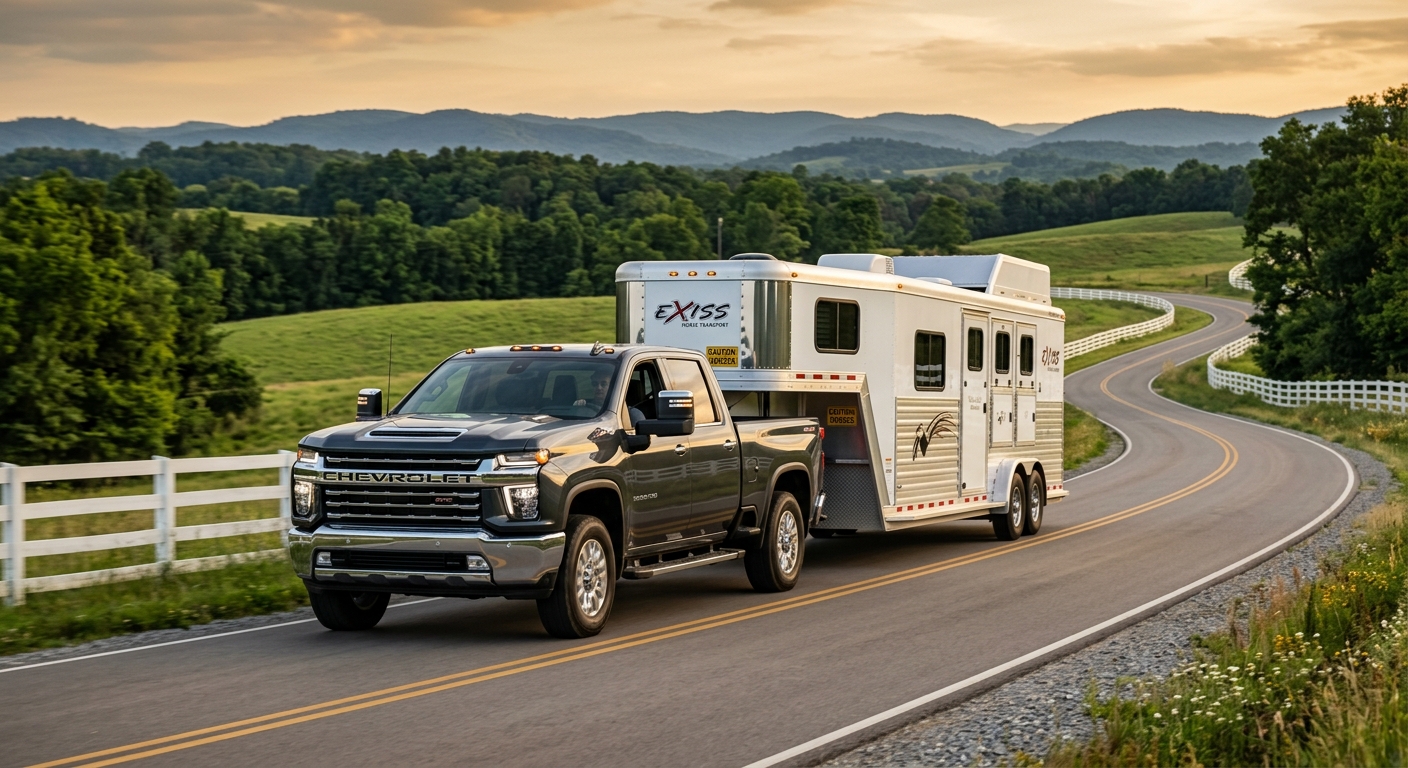
Towing Horse Trailers to the Tennessee Walking Horse National Celebration
Preparing for the Tennessee Walking Horse National Celebration in Shelbyville requires meticulous planning, especially when you are responsible for transporting prized show horses. Hauling a heavy horse trailer across Middle Tennessee presents unique challenges, from managing tongue weight on rolling state routes to navigating congested event gates. At Newton Chevrolet GMC, we understand that horse trailering is not a standard towing job because your cargo is alive, constantly shifting, and highly valuable.
Before you hook up your rig and head toward the historic show grounds, ensuring your tow vehicle is up to the task is the most critical safety step. Heavy-duty trucks are the industry standard for multi-horse trailers due to their robust frames, advanced cooling systems, and specialized trailering technologies. If you need to assess your current vehicle’s trailering capabilities or discuss upgrading to a truck engineered for heavy agricultural loads, you can reach out to our team by giving us a quick call to discuss your towing needs.
For exhibitors traveling from the surrounding rural communities, having a dependable dealership partner nearby provides peace of mind during a busy show season. If you want to inspect our heavy-duty lineup or need our service department to perform a pre-trip inspection on your truck, you can easily find our showroom location on Main Street. Our experienced team is always ready to help local horse owners find the right equipment to keep their animals safe on the road.
Table of Contents
- Trailer Parking and Staging Rules at Calsonic Arena
- Matching Your Rig to the Right Towing and Payload Capacity
- Understanding Tongue Weight and Gooseneck Stability
- Tennessee DOT Safety Requirements and Breakaway Systems
- Pre-Show Maintenance and Inspection Checklist for Your Rig
Trailer Parking and Staging Rules at Calsonic Arena
Are there designated trailer parking areas at Calsonic Arena? This is one of the most common logistical questions we hear from exhibitors preparing for the Celebration. Calsonic Arena and the surrounding Celebration grounds feature dedicated trailer parking areas that are completely separated from general spectator vehicle parking. These specialized lots are designed with much wider driving lanes and generous turning radiuses to accommodate large commercial haulers, dual-rear-wheel trucks, and multi-horse gooseneck trailers.
When you arrive at the grounds, you must follow the designated exhibitor entry gates to access the trailer staging and parking fields. Parking in spectator lots with a trailer is strictly prohibited, as those areas lack the space required for safe maneuvering and unloading. The designated trailer parking zones are situated on level ground, which is essential for safely lowering ramps and walking horses out of the trailer without risk of slipping.
Choosing the right tow vehicle can make navigating these crowded staging areas significantly easier. While full-size SUVs like the GMC Yukon are excellent for smaller, two-horse bumper-pull trailers, larger rigs require the footprint of a heavy-duty truck. For those towing compact, non-horse utility trailers or lightweight gear to the show, maneuverable options like the Chevrolet Trailblazer are highly popular for support crews. If you are looking for a versatile vehicle to assist your show team, you can explore our new Chevrolet Trailblazer inventory or check out our premium new GMC Yukon inventory to find a model equipped with the latest camera technologies.
Navigating the tight turns of the Calsonic Arena parking fields requires patience and excellent visibility. Modern trailering camera systems, which offer multiple exterior views including a virtual transparent trailer angle, are invaluable when backing a large rig into a tight parking spot among dozens of other exhibitors. Always utilize a spotter when backing up in the staging areas, as loose horses, pedestrians, and golf carts are common in these active zones during the Celebration.
Matching Your Rig to the Right Towing and Payload Capacity
Let’s talk about the math behind a safe towing setup, which is where many horse owners run into unexpected safety risks. A common mistake is focusing solely on a truck’s maximum towing capacity while completely overlooking its payload capacity. When hauling horses, payload capacity is often the limiting factor because it must account for the tongue weight of the trailer, the weight of all passengers, the gear in the truck bed, and the hitch hardware itself.
For exhibitors traveling from Lewisburg, where family farms often manage multiple horses, a light-duty truck may fall short when loaded down with tack, feed, and a steel trailer. While a half-ton truck can safely tow a standard two-horse bumper-pull trailer, attempting to haul a larger three-horse trailer or a rig with living quarters will quickly exceed the rear-axle weight ratings. Exceeding these limits compromises your braking efficiency, strains your transmission, and causes dangerous rear-end sag that reduces front-wheel steering traction.
To illustrate the difference in capability, consider the vehicle options available for different trailer sizes:
- Light-Duty Towing: A midsize SUV like the GMC Terrain is suited only for small utility trailers, not live animal transport.
- Half-Ton Towing: A properly equipped light-duty truck is ideal for lightweight aluminum two-horse bumper-pull trailers.
- Heavy-Duty Towing: Large multi-horse trailers and goosenecks require a heavy-duty platform with robust rear-axle ratings.
If you are currently evaluating your towing setup, you can browse our new GMC Terrain inventory for light-duty support needs, or step up to our highly capable new Chevrolet Silverado inventory to find a truck built for serious hauling. For those who prefer the interior space of an SUV but still require strong towing capability for a small horse trailer, we recommend looking through our new GMC Yukon XL inventory to find a vehicle that balances passenger comfort with robust trailering packages.
Understanding Tongue Weight and Gooseneck Stability
Another important thing to know about horse trailers is how the physical style of the trailer changes the towing dynamics. Bumper-pull trailers transfer their tongue weight directly to the rear receiver hitch of the tow vehicle, which should represent 10 to 15 percent of the total loaded trailer weight. If the tongue weight is too low, the trailer will sway violently at highway speeds; if it is too high, it will overload the truck’s rear suspension and lift weight off the front steering axle.
Gooseneck trailers, on the other hand, place the hitch ball directly over the truck’s rear axle in the bed. This configuration allows the truck to carry a much higher tongue weight—typically 20 to 25 percent of the total trailer weight—while maintaining exceptional stability. Because the pivot point is located over the axle rather than behind the bumper, goosenecks virtually eliminate trailer sway and offer a much tighter turning radius, which is incredibly helpful when parking at Calsonic Arena.
For large goosenecks, especially those with living quarters, a dual-rear-wheel (dually) truck is highly recommended because the extra set of rear tires dramatically increases lateral stability and payload capacity. If you are planning to haul a heavy gooseneck, you should browse our new Chevrolet Silverado HD inventory to find a truck equipped with a factory-installed fifth-wheel/gooseneck prep package. For lighter bumper-pull setups, a full-size SUV is a highly capable alternative, and you can view our new Chevrolet Tahoe inventory to find a model with an integrated trailer brake controller. For daily commuting when you aren’t towing, a compact option like our new Chevrolet Trax inventory makes an excellent fuel-efficient companion.
Tennessee DOT Safety Requirements and Breakaway Systems
One thing I always tell customers about hauling in our state is that Tennessee Department of Transportation (TDOT) regulations are strict when it comes to trailer safety. Under Tennessee law, any trailer with a gross weight of 3,000 pounds or more must be equipped with independent brakes acting on all wheels. This means that virtually every horse trailer on the road legally requires a functioning electric or hydraulic brake system connected to an in-cab controller in your truck.
In addition to operational brakes, Tennessee requires a fully functional breakaway system on all trailers equipped with brakes. A breakaway system utilizes a small onboard battery on the trailer frame connected to a cable attached to the truck’s receiver. If the trailer ever becomes uncoupled from the tow vehicle while in motion, the cable pulls a pin out of the switch, instantly engaging the trailer’s electric brakes to bring it to a safe stop.
When preparing your tow vehicle for these legal requirements, integrated technology makes compliance seamless. Many of our heavy-duty models feature built-in brake controllers that allow you to adjust gain on the fly from the driver’s seat. If you need a vehicle with advanced safety integration, you can check out our new Chevrolet Traverse inventory for midsize towing, or explore our spacious new Chevrolet Suburban inventory. For commercial-grade hauling needs, our new Chevrolet Silverado 6500 HD inventory offers the ultimate in heavy-duty braking and chassis strength.
Pre-Show Maintenance and Inspection Checklist for Your Rig
This is something we see a lot with seasonal exhibitors: trailers sit parked in a paddock for months, only to be hooked up and driven directly onto the highway without a proper safety check. Before you head out from Christiana, where gravel farm lanes can take a toll on tires and suspensions, performing a comprehensive pre-trip inspection is vital. Dry-rotted tires, rusted safety chains, and corroded electrical connectors are the leading causes of highway breakdowns.
To ensure a trouble-free trip to the Celebration, always follow this pre-haul checklist:
- Tire Pressure and Tread: Inspect both the truck and trailer tires, including the spares, for proper inflation and signs of dry rot or cracking.
- Brake Controller and Lights: Hook up the electronics and verify that all turn signals, brake lights, running lights, and the in-cab brake controller are functioning.
- Hitch and Coupler: Check the hitch ball, coupler, safety chains, and breakaway cable for wear, rust, or damage, and ensure the coupler locks securely.
- Floor and Structure: Inspect the trailer floorboards (especially under rubber mats) for rot, soft spots, or structural rust that could fail under a horse’s weight.
If you discover that your current tow vehicle needs service or if you want to trade it in before the show, you can look through our pre-owned vehicle specials to find a reliable, road-tested truck. For professional maintenance on your truck’s brakes, transmission, or cooling system, you can obtain directions to our service center to have our certified technicians inspect your rig. You can also give our service advisors a quick call to schedule an appointment before the busy Celebration week begins.
0 comment(s) so far on Hauling Your Rig to the Tennessee Walking Horse National Celebration