



Brakes and Rotors: Why Does Their Condition Matter?
What Exactly Do Brake Rotors Do, and Why Does Their Condition Matter?
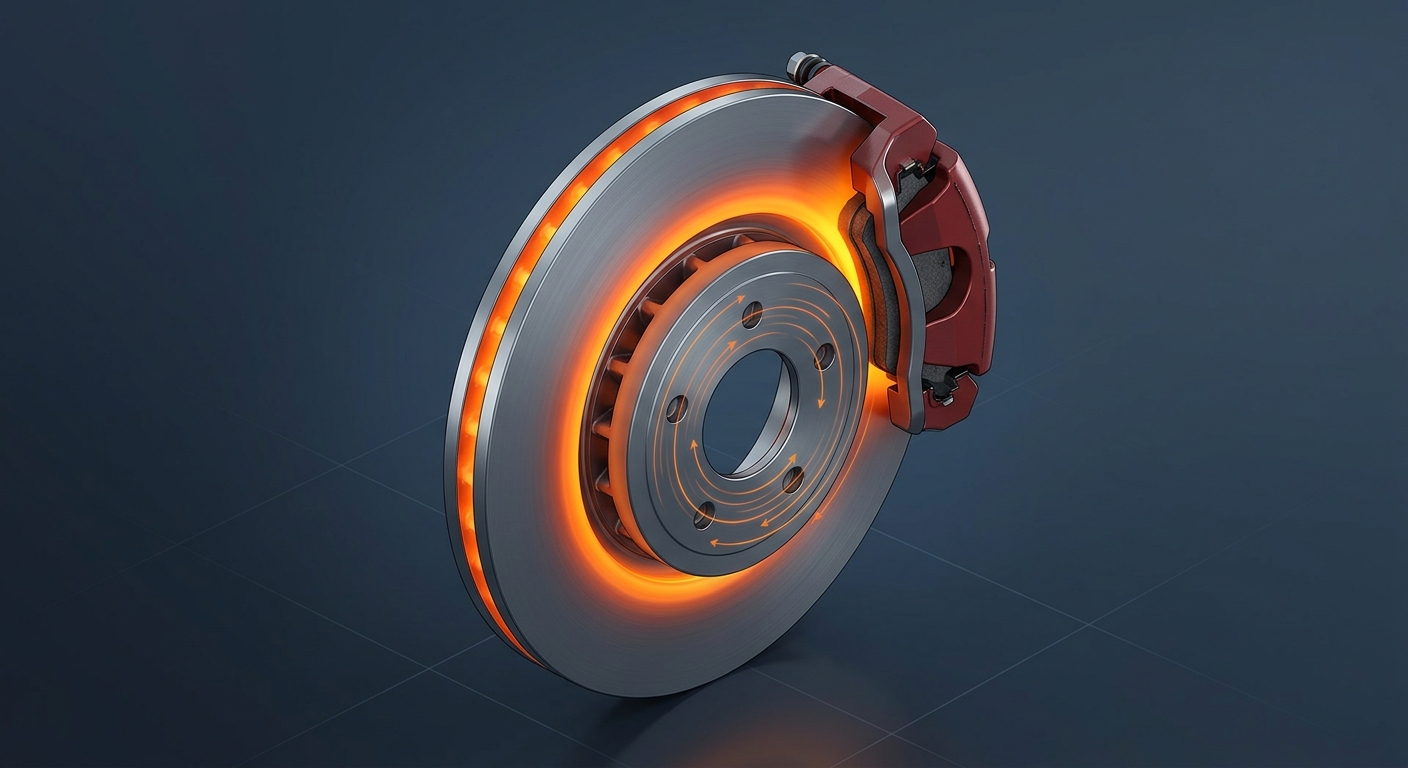
Brake rotors are circular cast-iron discs attached to your vehicle’s wheel hubs that spin in direct unison with your tires. When you press the brake pedal, hydraulic calipers clamp friction lined brake pads against both sides of the spinning rotor, converting kinetic energy into thermal heat to slow and stop the vehicle. Rotor surface condition and thickness dictate stopping distance, pedal firmness, and heat dissipation safety.
| Component | Primary Function | Key Warning Sign of Wear or Failure |
|---|---|---|
| Brake Rotors | Disperse kinetic heat and provide friction surface | Pedal pulsation, steering wheel vibration, scoring |
| Brake Pads | Clamp against rotors to create stopping friction | High-pitched squeal, metallic grinding at 2 mm |
| Brake Calipers | Squeeze pads onto rotors via hydraulic fluid pressure | Vehicle pulling to one side, uneven pad wear |
The friction generated during stopping produces intense heat. High-quality rotors must absorb and dissipate this thermal energy rapidly without structural distortion. When rotors wear thin, develop deep grooves, or suffer surface warping, the brake pads cannot maintain complete contact with the iron face. This reduction in contact area directly increases stopping distance and compromises vehicle control under sudden braking conditions.
Maintaining smooth, structurally sound rotors is vital for vehicle safety and component longevity. Damaged or uneven rotor surfaces accelerate pad wear and create vibration throughout the suspension. Drivers navigating the rolling terrain of the Highland Rim near Christiana frequently rely on consistent downhill braking, where sustained thermal exposure makes proper rotor thickness and cooling capability essential.
For complete vehicle inspection and service support, drivers can visit our Shelbyville service center or give our team a quick call to consult with a factory-trained technician.
Table of Contents
- How Do You Know If Your Brake Rotors Need Replacement or Resurfacing?
- Can You Replace Brake Pads Without Replacing or Resurfacing the Rotors?
- What Causes Brake Rotor Wear, and How Long Do They Typically Last?
- How Does Certified Care at Newton Chevrolet GMC Protect Your Vehicle?
- What Buyers and Drivers Ask Most About Brake and Rotor Service
- Schedule Your Comprehensive Brake Inspection Today
How Do You Know If Your Brake Rotors Need Replacement or Resurfacing?
You can identify rotors in need of service when you experience a pulsating brake pedal, steering wheel shudder during high-speed slowing, high-pitched metallic grinding, or visible scoring grooves on the metal face. Technicians determine whether a rotor can be resurfaced on a lathe or must be fully replaced by measuring its remaining thickness against the manufacturer’s stamped discard thickness specification.
- Pedal Pulsation and Shudder: A rhythmic pulsing in the brake pedal or a shudder in the steering wheel indicates lateral runout or thickness variation across the rotor face, commonly caused by intense heat cycles.
- Deep Grooving and Scoring: Rough channels carved into the rotor surface occur when worn brake pads drop below 2 mm of friction material, allowing the steel backing plate to scrape the iron casting.
- Heat Glazing and Blue Discoloration: Dark, bluish spots signal extreme overheating, which alters the metal structure and reduces friction effectiveness.
- Micro-Cracking: Thermal stress cracks radiating across the friction ring compromise structural integrity and require immediate component replacement.
Resurfacing, often called turning rotors, cleans off light glaze and minor surface imperfections by removing a thin layer of metal on a brake lathe. However, resurfacing is safe only when the remaining material stays well above the OEM minimum machining threshold. If a rotor is machined below this limit, it loses the mass required to dissipate heat, leading to rapid warping or structural failure.
When evaluating overall stopping performance, our technicians also check tire wear patterns to ensure the chassis tracks evenly. Drivers experiencing uneven tracking or braking instability can use our online tire finder tool to verify proper tire fitment alongside routine brake system maintenance.
Can You Replace Brake Pads Without Replacing or Resurfacing the Rotors?
Installing new brake pads without servicing or replacing the rotors is acceptable only when the rotors measure comfortably above minimum safety thickness, spin true without lateral runout, and show a smooth surface free of deep scoring or heat spots. Placing flat, new friction material against uneven or glazed iron surfaces causes noise, reduces stopping power, and rapidly damages the new pads.
When vehicle owners ask whether they can perform a simple pad swap without rotor work, our service advisors always begin with precision measurements. Technicians use a digital micrometer to verify rotor thickness across multiple points and check lateral runout with a dial indicator before recommending any service path.
Skipping rotor resurfacing or replacement on a worn disc creates several performance issues:
- Reduced Stopping Power: New brake pads require a flat, smooth mating surface to bed in properly. Grooved rotors touch only the high spots of a new pad, reducing initial braking efficiency.
- Brake Noise and Squeal: Glazed or uneven rotor faces create micro-vibrations between the pad and disc, resulting in high-pitched squeals during light pedal application.
- Shortened Component Life: Uneven surface contact causes localized hot spots on the new friction pad, accelerating wear and forcing premature pad replacement.
Properly pairing fresh brake pads with smooth, flat rotors restores full stopping power and ensures quiet, reliable operation across all driving conditions.
What Causes Brake Rotor Wear, and How Long Do They Typically Last?
Brake rotors generally last between 30,000 miles and 70,000 miles, depending on vehicle weight, driving environment, friction material composition, and driver habits. Rotor wear is caused primarily by friction and extreme heat, but moisture, severe road conditions, and excessive vehicle loads significantly shorten operational lifespan.
| Driving Condition | Average Rotor Life | Primary Wear Mechanism |
|---|---|---|
| Normal Highway Commuting | 50,000-70,000 mi | Gradual, light friction wear |
| Stop-and-Go Urban Driving | 30,000-50,000 mi | Frequent heat cycles and repeated friction contact |
| Heavy Towing & Agricultural Duty | 25,000-40,000 mi | High thermal stress and severe mechanical friction |
Several key factors accelerate rotor deterioration over time:
- Thermal Stress: Rapid stopping under heavy loads generates high heat that expands the cast iron unevenly, causing rotor warping and thickness variation.
- Severe Operating Duty: Light trucks and commercial vehicles carrying heavy payloads experience higher kinetic loads, pushing front brake pad replacement down into the 15,000 miles to 25,000 miles range and wearing rotors faster.
- Corrosion and Environmental Exposure: Vehicles exposed to continuous humidity, standing water, or mud develop deep rust pitting along the rotor vanes and surface edges, weakening the metal casting.
- Aggressive Braking Habits: Repeated hard braking at higher speeds prevents the braking system from cooling between stops, leading to localized metal hardening and glazing.
Farmers and commercial operators hauling heavy equipment around Lewisburg often experience accelerated rotor wear due to frequent high-mass stopping requirements. Performing visual brake pad checks every 7,500 miles during routine oil changes helps catch uneven wear patterns early before metal-to-metal contact damages the rotors.
How Does Certified Care at Newton Chevrolet GMC Protect Your Vehicle?
Factory-certified service at Newton Chevrolet GMC protects your vehicle by combining genuine OEM components, specialized measuring tools, and factory-trained technicians who understand exact vehicle tolerances. Routine multi-point inspections align with manufacturer maintenance schedules, recommending full system evaluations every 7,500 miles to 15,000 miles to maintain peak stopping capability.
Generic aftermarket repair parts often vary in weight, vane structure, and iron alloy density compared to original equipment specifications. Authentic Chevy and GMC rotors feature engineered cooling vane configurations designed specifically for your truck or SUV’s weight distribution and tow capacity. This precise engineering ensures predictable thermal management, pedal feel, and structural durability.
Our service center provides complete support for personal trucks, work vehicles, and commercial fleets. Commercial operators looking to expand or upgrade their working transport can explore our new GMC commercial truck lineup to find vehicles equipped with heavy-duty braking components built for severe service demands.
Every repair performed at our facility adheres to rigorous factory procedures, ensuring your vehicle retains its original safety standards and braking balance. Drivers interested in learning more about our customer commitment can review the Newton Advantage to see how certified maintenance delivers long-term confidence on the road.
What Buyers and Drivers Ask Most About Brake and Rotor Service
Q: What is the minimum thickness requirement for brake rotors?
The minimum thickness requirement, or discard thickness, is the precise measurement below which a rotor can no longer safely absorb friction heat or withstand clamping forces. This number is permanently stamped onto the outer casting edge or inner hub of every OEM rotor. Technicians measure this dimension using a micrometer during inspections; if the rotor wears to or below this specification, it must be replaced immediately to prevent structural cracking or brake failure.
Q: Why do brake rotors show surface rust after sitting overnight?
Cast-iron brake rotors naturally develop a thin layer of surface rust overnight when exposed to ambient moisture, humidity, or rain. Because rotors are bare metal surfaces without protective paint, iron oxidation occurs quickly. This light surface rust is completely normal and safely sweeps off during the first two or three light brake applications when you begin driving in the morning.
Q: How does wheel alignment affect brake system wear?
Improper chassis alignment forces tires to drag unevenly across the pavement, creating erratic tracking that unevenly distributes vehicle weight during stops. This unbalanced force puts unequal friction strain on opposing brake calipers and pads, resulting in premature, uneven rotor wear across the front axle. Maintaining correct alignment geometry ensures balanced braking load distribution and extends component life. Drivers can schedule a four-wheel alignment service alongside routine brake care.
Q: Are ceramic brake pads better for rotor longevity than semi-metallic pads?
Ceramic brake pads feature dense ceramic compounds blended with soft copper fibers, making them less abrasive on cast-iron rotor surfaces than semi-metallic options. They run cleaner, quieted micro-vibrations, and extend rotor life under normal commuting conditions. Semi-metallic pads contain harder metallic shavings that provide higher friction for heavy truck towing, but cause faster physical wear on the rotor surface over time.
Q: How often should I have my brake pads and rotors inspected?
Vehicle manufacturers recommend inspecting the entire brake system at least once a year or every 7,500 miles to 15,000 miles, matching standard tire rotation and oil change intervals. Vehicles subjected to frequent stop-and-go driving, heavy towing, or agricultural work benefit from checks every 5,000 miles to identify worn pads approaching 3 mm of remaining material before rotor scoring takes place. You can explore flexible payment tools through our financing options or convenient online booking when you schedule brake service online today.
Schedule Your Comprehensive Brake Inspection Today
Maintaining safe, predictable stopping power requires keeping both brake pads and rotors in optimal working condition. Addressing early warning signs like pedal pulsation, squealing sounds, or extended stopping distances prevents minor pad wear from escalating into major system repairs. Proactive care preserves your vehicle’s safety systems, protects tow capacity, and ensures consistent pedal feel on every commute.
Our factory-trained technicians at Newton Chevrolet GMC stand ready to perform precise digital micrometer measurements, rotor resurfacing evaluations, and complete system checks tailored to your vehicle. Whether managing a family SUV or maintaining a heavy-duty work truck, our service team delivers clear recommendations backed by authentic OEM parts.
Schedule your next service visit online or reach out directly to speak with our service team. You can easily find our Shelbyville dealership or give us a call at (931) 536-3120 to reserve your appointment and ensure your vehicle remains completely safe on the road.
0 comment(s) so far on Brakes and Rotors: Why Does Their Condition Matter?