



Beat the Middle Tennessee Heat: My Guide to Chevy and GMC Summer Cooling and A/C Maintenance
When Did Chevrolet and GMC Switch to R-1234yf Refrigerant?
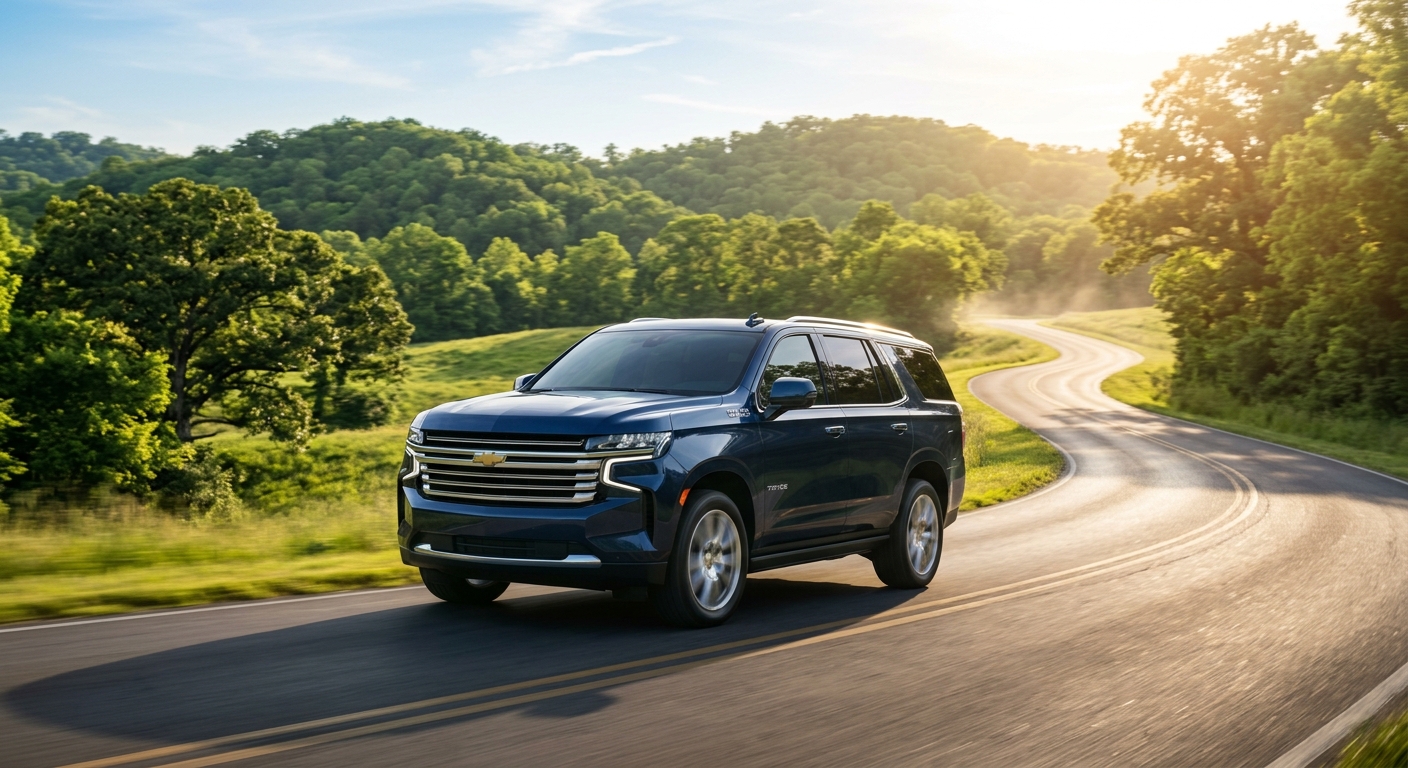
If you are driving a newer model, such as the spacious Chevrolet Suburban or the refined GMC Yukon, your vehicle is equipped with this modern system. This newer refrigerant requires specialized equipment to service, meaning that traditional backyard recharges are no longer practical or safe. The chemical properties of R-1234yf make it mildly flammable under highly specific conditions, which is why the service ports and fittings are completely different from older systems to prevent accidental mixing.
Whether you are driving a compact Chevrolet Trax for your daily commute or hauling a trailer with a heavy-duty Chevrolet Silverado HD, maintaining this system is key to staying comfortable. If you suspect your A/C is not blowing as cold as it should, you can reach out to our service department by giving us a quick call or visiting our Shelbyville showroom to have our certified technicians perform a proper diagnostic. We also carry a wide selection of vehicles equipped with these advanced systems, so feel free to browse our new inventory to find your next ride.
Table of Contents
- How Automatic Climate Control Keeps You Cool in Your Chevy or GMC SUV
- Spotting and Preventing Engine Overheating in Your Silverado
- Why Your Cabin Air Filter Is Crucial for Summer Airflow
- Keeping Up with Dex-Cool Maintenance and Water Pump Checks
- Get Your Chevrolet or GMC SUV Ready for Hot Weather Travel
How Automatic Climate Control Keeps You Cool in Your Chevy or GMC SUV
Have you ever wondered how your vehicle manages to keep the cabin perfectly comfortable even when the Middle Tennessee sun is blazing? Modern automatic climate control systems in vehicles like the GMC Yukon XL and the Chevrolet Traverse rely on a complex network of sensors to maintain your desired temperature. These systems utilize interior cabin temperature sensors, ambient outdoor air temperature sensors, and even solar sensors that measure the intensity of the sunlight entering through the windshield. By constantly analyzing this data, the vehicle can automatically adjust the fan speed, air distribution, and A/C compressor output to keep you cool without you constantly adjusting the dials.
For families in Christiana who regularly head out for weekend outdoor recreation along the Duck River, having a reliable dual- or tri-zone climate system means everyone stays comfortable after a long day in the sun. If you look at the LS trim of the Chevrolet Suburban, which starts at a base MSRP of $63,700 with a $2,795 destination charge, you get a highly capable tri-zone automatic climate control system as standard equipment. Moving up to luxury trims like the High Country, starting at $83,700 with the same $2,795 destination charge, adds advanced solar sensors that adjust cooling based on the angle of the sun. Other trims like the LT ($66,700), Z71 ($73,700), RST ($71,700), and Premier ($78,600) also feature this robust climate control setup, ensuring that every passenger stays cool regardless of where they are seated.
To ensure your vehicle is ready for all your summer travels, it is also a good idea to check your tires, as hot pavement can accelerate wear and affect handling. Our team can assist you with finding the right tires for your specific model or help you with shopping for new tires before your next road trip. If you are considering upgrading to a newer model with advanced climate features, you can also start exploring your financing options online to see how easily a new SUV can fit into your budget.
Engine & Performance
Powertrain specs by trim
| Feature | High Country | LS | LT | Premier | RST | Z71 |
|---|---|---|---|---|---|---|
| Engine | 6.2L | 5.3L | 5.3L | 5.3L | 5.3L | 5.3L |
| Horsepower | 420 hp | 355 hp | 355 hp | 355 hp | 355 hp | 355 hp |
| Torque | 460 lb-ft | 383 lb-ft | 383 lb-ft | 383 lb-ft | 383 lb-ft | 383 lb-ft |
| Transmission | 10-speed automatic | 10-speed automatic | 10-speed automatic | 10-speed automatic | 10-speed automatic | 10-speed automatic |
| Drivetrain | Rear-wheel drive | Rear-wheel drive | Rear-wheel drive | Rear-wheel drive | Rear-wheel drive | Four-wheel Drive |
Spotting and Preventing Engine Overheating in Your Silverado
A common misconception among truck owners is that modern cooling systems are completely maintenance-free until something breaks. When you are towing heavy loads with a 6.2L engine producing 420 hp and 460 lb-ft of torque in a High Country trim, the cooling system works significantly harder than a standard 5.3L engine with 355 hp and 383 lb-ft of torque found in the LS or LT trims. Both setups utilize a smooth 10-speed automatic transmission, but the increased thermal load of heavy hauling makes routine cooling system inspections crucial. This is particularly true for drivers in Lewisburg who rely on their trucks for daily agricultural hauling and navigating rural farm roads where stop-and-go driving can quickly raise engine temperatures.
Our service technicians often see trucks come in with discolored fluid or low levels, and we always show owners how to inspect the translucent recovery tank when the engine is completely cold. The fluid level should always sit between the minimum and maximum markings on the reservoir. Common symptoms of a failing radiator include engine overheating, coolant leaks pooling under the vehicle, a low coolant warning light, or bent and damaged radiator fins that restrict airflow. Additionally, a stuck-closed thermostat can block the flow of coolant to the radiator, keeping it trapped within the engine block and causing rapid overheating in a matter of minutes.
If you want to keep your current truck running smoothly or are looking to upgrade, you can check out our pre-owned vehicle specials to find a great deal on a reliable vehicle. We also offer great promotions on new models, including Chevrolet Trax incentives, Chevrolet Trailblazer promotions, Chevrolet Equinox lease deals, and Chevrolet Silverado lease deals. Beyond providing excellent vehicles, we are proud to participate in the Chevy Cares program and offer resources to learn about Chevy accessibility features. If you are interested in the latest electric vehicle technology, we can also assist you with scheduling a Chevrolet EV test drive today.
Why Your Cabin Air Filter Is Crucial for Summer Airflow
If you turn on your air conditioning on a hot afternoon and notice a weak breeze or a musty odor, the culprit is almost always a clogged filter. The cabin air filter plays a vital role in cleaning the outside air entering your vehicle’s interior through the heating, ventilation, and air conditioning system. It is designed to trap dust, pollen, soot, and other airborne particles, ensuring that the air you and your family breathe is clean and healthy. Over time, however, this filter becomes saturated with debris, which restricts airflow and forces your blower motor to work much harder, increasing noise and reducing cooling efficiency.
It is generally recommended to replace your cabin air filter every 22,500 miles, but dusty driving conditions can easily cut that interval in half. Common signs of a clogged cabin air filter include:
- Significantly reduced airflow from the HVAC vents
- Increased blower fan noise as the system struggles to pull air
- Persistent musty or dusty odors inside the cabin
- Poor defrosting performance during sudden summer rainstorms
To keep your system performing at its best, you can easily order genuine parts online through our website. If you are planning a larger service visit or need to address multiple maintenance items, you can also learn about our financing options to help manage the costs. Plus, when you choose original equipment manufacturer parts, you can view our auto parts warranty for added peace of mind and long-term protection.
Keeping Up with Dex-Cool Maintenance and Water Pump Checks
General Motors specifies Dex-Cool orange coolant for Chevrolet and GMC vehicles, noting a design service life of 5 years or 150,000 miles. However, independent service experts and our own experienced technicians recommend evaluating and replacing the coolant at 5 years or 100,000 miles under real-world driving conditions. Over time, coolant can become acidic and lose its protective properties, which can lead to corrosion inside the radiator, heater core, and engine block. Regular cooling system flushes are especially important if you frequently use your vehicle for towing or operate in heavy stop-and-go traffic.
Another critical component to watch is the water pump, which is responsible for circulating coolant throughout the engine. GM-focused maintenance experts report that water pump failure on the 5.3L EcoTec3 V8 commonly appears between 80,000 and 120,000 miles. A failing water pump often gives warning signs, such as a slow coolant leak, a squealing noise from the front of the engine, or steam rising from under the hood. Catching these issues early during a routine multi-point inspection can prevent a catastrophic engine failure caused by sudden overheating.
If you notice any of these warning signs, you can easily contact our parts department to find the exact replacement components you need. We also offer convenient ways to get pre-approved for financing if you are looking to transition into a newer, low-maintenance vehicle. Additionally, while your vehicle is in the shop for cooling system service, it is a great time to learn about tire alignment service to ensure your vehicle handles safely and efficiently all summer long.
Get Your Chevrolet or GMC SUV Ready for Hot Weather Travel
Before you pack up the family for a summer road trip, taking a few minutes to inspect your cooling system can save you from a major headache on the highway. A comprehensive hot-weather inspection should include checking all fluid levels, inspecting radiator hoses for soft spots or cracks, and ensuring that your cooling fans are engaging properly. Making sure your vehicle is in peak operating condition is the best way to ensure a safe, comfortable, and uninterrupted journey for everyone on board.
Even with the best preparation, unexpected situations can happen on the road, which is why having manufacturer-backed protection is so valuable. Every new and qualified pre-owned Chevrolet and GMC vehicle comes with access to dedicated roadside assistance programs. This service provides brand-specific expertise, genuine parts, and towing to authorized service centers, ensuring your vehicle’s warranty protection remains fully intact. If you ever find yourself in need of emergency support on the road, you can contact Chevrolet Roadside Assistance at 1-800-243-8872 for prompt, professional help.
If you are ready to schedule your pre-trip inspection or need to address an ongoing cooling issue, you can get directions to Newton Chevrolet GMC to visit our state-of-the-art service center. You can also call our service team directly to speak with an advisor about your vehicle’s specific maintenance needs. For those who prefer to handle their own basic maintenance, our parts department is always ready to help you order genuine OEM parts to keep your vehicle running exactly as the manufacturer intended.
### Fuel Economy
*Fuel economy and range by trim*
| Feature | High Country | LS | LT | Premier | RST | Z71 |
|---|---|---|---|---|---|---|
| MPG | 15 city / 19 hwy / 16 combined | 15 city / 20 hwy / 17 combined | 15 city / 20 hwy / 17 combined | 15 city / 20 hwy / 17 combined | 15 city / 20 hwy / 17 combined | 14 city / 19 hwy / 16 combined |
0 comment(s) so far on Beat the Middle Tennessee Heat: My Guide to Chevy and GMC Summer Cooling and A/C Maintenance