Sales:
931-492-9172
Service:
931-264-4012
Open Today Sales: 9 AM-7 PM




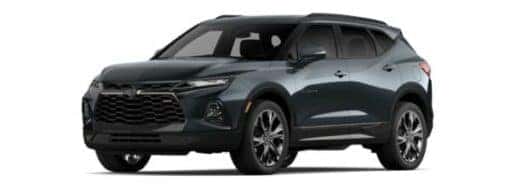
Starting at
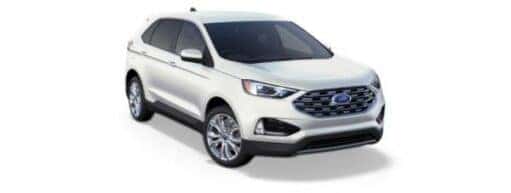
Starting at
| 25 | Fuel Economy (mpg) | 23 |
| 4,500 | Towing (lbs) | 3,500 |
| Avl. | Surround Vision | No |
Striking the ideal balance between size, comfort, and efficiency, today's midsize SUVs are the perfect family vehicles. They're practical without seeming stodgy and have become the go-to choice for drivers seeking an adaptable ride that has something for everyone. But just because they're practical doesn't mean they can't also be fun. Sure, you're not about to start racing in the same car you used to drop the kids off at soccer practice, but a little style never hurt anyone. The 2022 Chevy Blazer is one great example of this new breed of crossover that makes no apologies for its style-first attitude.
With styling cribbed from one of America's most beloved sports cars, the midsize Blazer cuts an intimidating figure with aggressive lines that make some other midsize SUVs look more than a little dowdy in comparison. It's also got the goods where it counts, with two impressive engine options to choose from and a host of impressive infotainment, driver-assistance, and safety technology that makes all the difference in today's crowded auto market. So how does the 202 Blazer compete with some of its closest rivals in the category? Let's pit the 2022 Chevy Blazer vs 2022 Ford Edge and see which of the two midsize crossover offerings deserves a test drive.
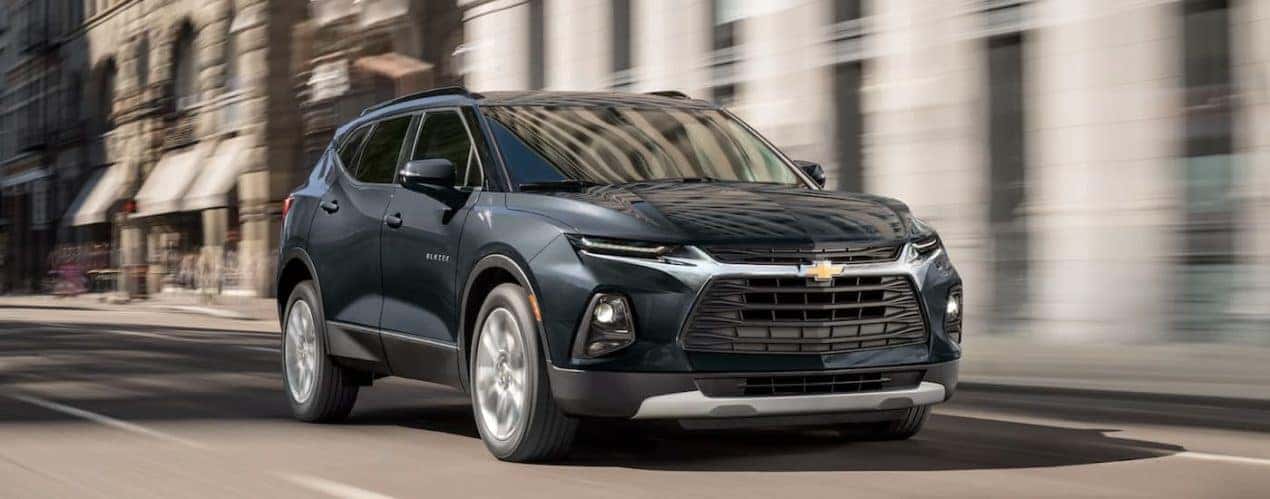
With Chevy deciding to drop the 2.5-liter, four-cylinder option for 2022, both the Blazer and Edge are now being sold with two very similar engine options: a base model 4-cylinder and an optional V6 upgrade. While, on the surface, this might seem to put the two crossovers on even footing, not all engines are created equal. Let's take a closer look and see how the Chevy and Ford powertrains compare when it comes to power, performance, and fuel efficiency.
The 2022 Blazer cuts a striking figure with strong, aggressive lines inspired by Chevy's legendary muscle car, the Camaro. The sporty look would be enough to draw most drivers to the model, but when it comes to the Blazer, Chevy has ensured that the goods under the hood match the SUV's muscular exterior style. The crossover comes standard with a turbocharged 2.0-liter, four-cylinder engine putting out 228 hp––just behind the Edge's 250 hp––but is among the most efficient in its class.
Thanks to the inclusion of automatic stop/start and a host of hardworking fuel economy technology, the four-cylinder Blazer posts an impressive 25 MPG combined to the Edge's 23 MPG combined. The difference is nearly as pronounced when you start looking at the V6 options. The Blazer remains near the top of its class with an EPA-estimated 22 MPG combined, but the Edge loses some ground in comparison with 21 MPG combined. To some extent, this gulf can be chalked up to the fact that the Edge comes standard with all-wheel drive while the base model Blazer is offered in front-wheel drive, but that's still not much of an excuse from two SUVs sporting almost identical engines. The Blazer also holds the advantage when it comes to towing capacity with the ability to tow 4,500 lbs to the Edge's 3,500 lbs.
The Blazer's V6 is larger than the Ford's, with a 3.6-liter displacement to the Edge's 2.7-liters. The Edge uses a twin-turbo to make the most of its smaller displacement, but that doesn't mean the Blazer lags behind. The Chevy's powerful V6 is able to produce some 308 hp, which is more than enough to put a little pep in the midsize SUV's step. The ride is fun and responsive, and the powerful V6 pairs well with the Blazer's sporty appearance, allowing SUV drivers to experience what life might be like behind the wheel of a Camaro.
The Edge's smaller V6 offers similar performance and excels in the torque department with 380 lb-ft, though it'll come at a premium as Ford has really saved many of the higher-end upgrades for the sportier ST trim. The high-performance model comes standard with the powerful 2.7-liter engine and sport-tuned suspension, but starting at $46,210, there are better bargains to be had out there. That's not to say the Edge isn't fun to drive, but it sort of feels like a compromise no matter how you frame it: the four-cylinder engine doesn't offer the same efficiency as the Blazer's, and the V6, while undoubtedly powerful, almost seems a little like overkill in most cases.
Advanced driver-assist and safety features are important in any vehicle but are especially relevant when you're talking about family-friendly midsize SUVs like the Chevy Blazer and Ford Edge. Both vehicles have earned a stellar five-star review from the National Highway Traffic Safety Administration (NHTSA), with the vehicles taking home top marks in nearly every crash-test category. These sort of results from independent third-party reviewers can offer drivers valuable peace of mind, but let's dig a little deeper and see how the two SUVs compare when it comes to safety and driver-assistance features.
The 2022 Blazer comes standard with a full suite of advanced driver-assist and safety technologies that are helpful when it comes to taking some of the stress out of your everyday driving. Standard Chevy Safety Assist features include automatic high beams that allow drivers to spend more time focusing on the road and less time adjusting their headlights, improving safety not only for the Blazer's driver and passengers but every other car on the road as well. It might not seem like much, but it's sometimes not until a feature like this becomes automated that you realize just how much of a hassle it was. The 2022 Blazer also includes lane-departure warning and lane-keeping assist as standard features on all trim levels, giving every driver the opportunity to experience the latest and greatest in automotive safety technology.
As you start to climb into some of the upper trim offerings, the Blazer's safety credentials become even more impressive. Available features like blind-spot monitoring and rear cross-traffic alert go a long way in preventing accidents at both high and low speeds, with the former coming in especially handy when attempting to change lanes on the highway. Rear cross-traffic alert should help cut down on some of those parking lot fender benders, alerting drivers to any vehicles, pedestrians, or shopping carts that happen to be passing behind the vehicle while they're attempting to back up. Lastly, adaptive cruise control gives drivers the ability to set a desired speed and then just sit back and relax as the system uses a network of cameras and sensors to keep a prescribed distance away from any other vehicles.
Powered by Ford's Co-Pilot360 technology, the 2022 Edge holds up pretty well in the safety and driver-assist department, though critics did take some issue with the SUV's roller rating and headlights. While the headlights on the Titanium and ST models equipped with optional packages earned an Acceptable rating from the Insurance Institute for Highway Safety (IIHS), the lighting setup on all other models was hit with the organization's lowest rating. It's not a huge deal––and is rectified by springing for a higher trim––but it seems like it would have been a relatively easy fix that was nonetheless overlooked. In most other departments, Ford's well-reviewed Co-Pilot360 system carries the day with the Edge earning Superior and Advanced ratings for its vehicle-to-vehicle and vehicle-to-pedestrian crash prevention systems, respectively.
Standard driver-assist and safety features on the 2022 Edge include forward collision warning, lane departure warning, lane-keep assist, pedestrian detection, and more. The SUV's systems of cameras and sensors make parking and blind-spot monitoring a breeze, and like the Blazer, the Edge comes standard with automatic high-beam headlights.
The Edge boasts a long list of available driver-assistance features though some, like lane-centering assist, are a little less impressive given the fact that they're included standard on the 2022 Blazer. Still, these go a long way in helping to round out the SUV's safety profile with features like evasive steering assist, adaptive cruise control, automatic parking assist, and rain-sensing windshield wipers keeping Ford's midsize offering competitive within the segment.
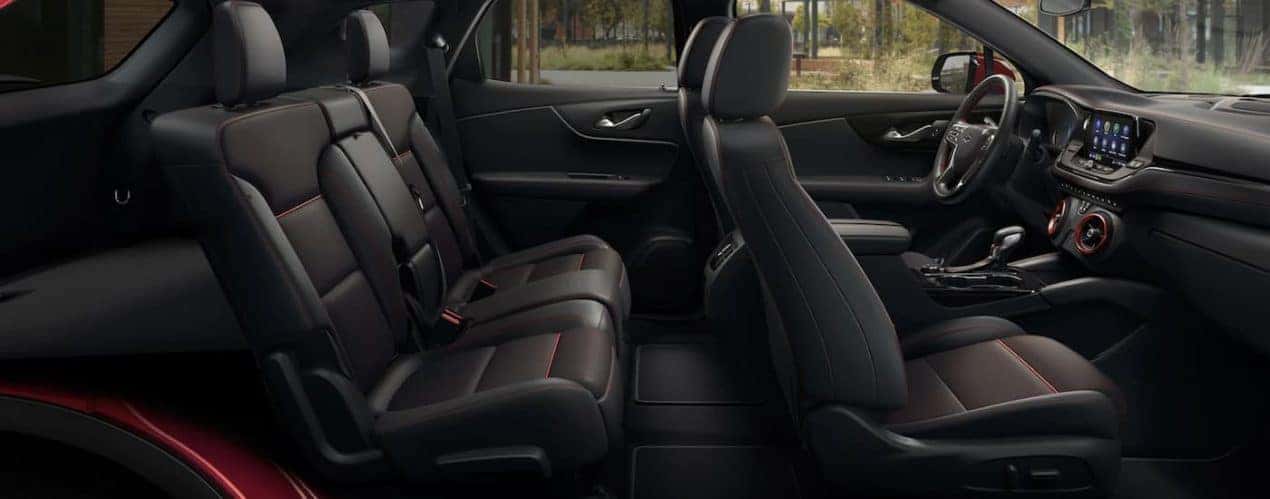
Today's SUVs are increasingly judged not by their powertrains, styling, or off-road features but rather by how many goodies you can pack into the cabin. Interior styling and infotainment features are a bigger consideration than ever amongst drivers who want all the creature features they can get their hands on. The 2022 Blazer holds up well in this regard, extending the Camaro-inspired styling of its exterior into the cabin, where the sports car's impact is evident.
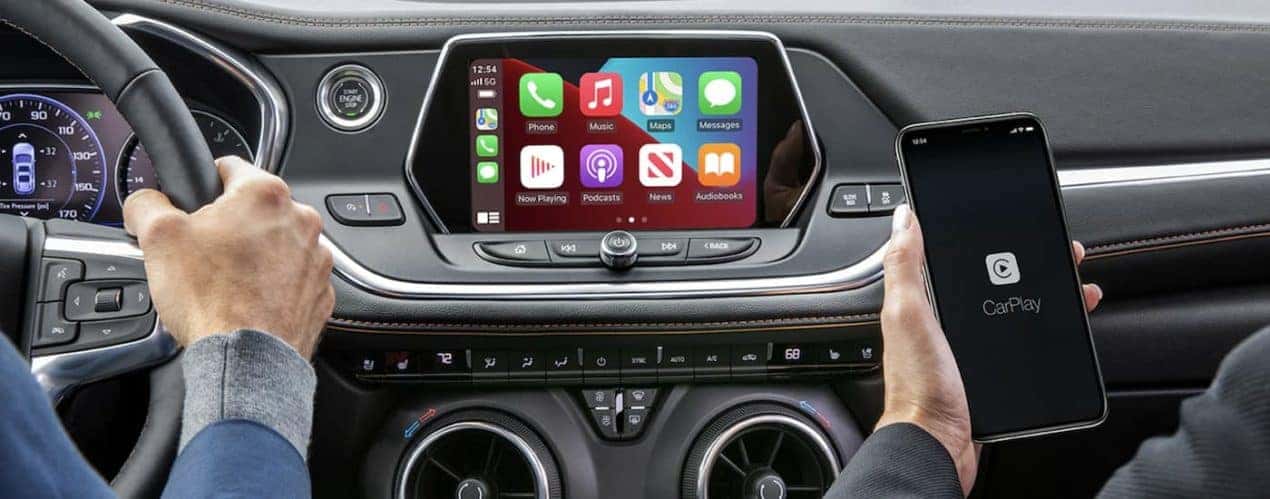
From circular air vents to the unique hexagonal infotainment system, the Blazer's interior is unlike almost anything else in its class, with an aggressive, mature look that will make the SUV the fastest-looking ride in the school pickup line. Chevy clearly threw out the playbook when it came to the Blazer, introducing a number of novel features and premium styling cues that wouldn't look out of place in a much more expensive vehicle. For example, those circular air vents we mentioned feature adjustable climate controls set into a ring around the vents themselves. This futuristic design might be confusing at first, but it is a prime example of the fact that when it came to designing the 2022 Blazer, no idea was off the table.
The Blazer comes standard with an 8-inch touchscreen that's both responsive and easy to look at. Kudos to Chevy for not going too wild with the touchscreen controls because while some of the SUV's systems can only be controlled through the display, other, more common functions have their own dedicated physical knobs and buttons. It might not seem like much, but sometimes the tactile response of a real dial can make all the difference over its digital equivalent. The infotainment system includes the usual complement of connected services like Apple CarPlay, Android Auto, Amazon Alexa, and Bluetooth, as well as a six-speaker stereo system and Wi-Fi hotspot. Drivers who want to splurge on some optional features have the choice of upgrading to an eight-speaker stereo as well as other premium features such as a built-in navigation system and wireless device charging.
The interior might be the one area where the Edge lags most notably behind Chevy's midsize contender. This is little surprise given the Camaro's influence on the Blazer's design, and it's hard to fault Ford for not thinking of it first, but the result is a completely average interior that doesn't have enough high-end features to distract from its underwhelming design. Not only is the interior sort of drab, but it also doesn't hold up well to close scrutiny as the lack of quality materials quickly becomes evident. Some higher-end trims make an effort to up the Edge's interior game, but even at the top tier, the result is anti-climatic.
One highlight is the Edge's infotainment screen. The massive 12-inch tablet-like display has the Blazer beat by a good 4 inches. Size isn't everything when it comes to touchscreen infotainment systems, but it sure makes them a lot easier to navigate, especially when the vehicle is in motion. The infotainment display runs on Ford's SYNC 4A software and is impressively responsive, but unlike Chevy, the automaker has fallen into the trap of becoming over-reliant on touchscreen controls. Having media, navigation, and other infotainment controls integrated into the display is one thing, but the sooner brands learn to stop hiding their vehicle's HVAC controls in their touchscreens, the better. Not only are they difficult to find in some cases, but they can also be overly sensitive, making adjusting them on the fly an exercise in frustration.
The Edge does come with a generous list of optional features which allow drivers to drastically upgrade the in-cabin experience. These include a premium 12-speaker Bang & Olufsen stereo system, proximity keyless entry, a household-style power outlet, a universal garage door opener, and a panoramic roof. One of the more novel features we appreciated was the auto-dimming rearview mirror which, upon detecting retina-burning high-beam headlights coming from a trailing vehicle, automatically dims the rearview to help preserve your precious night vision.

While the 2022 Chevy Blazer and 2022 Ford Edge stack up pretty well against one another, the Edge just comes across a little bland in comparison. While the two midsize SUVs feature comparable performance and safety features, Chevy's engineers just seem to have put a little more time and effort into the design of the 2022 Blazer, both inside and out. The Blazer's Camaro-inspired exterior is one obvious highlight, but the interior also bests the Ford by a slim margin with just a little more in the way of style.
If you'd like to see what the road looks like from behind the wheel of this stylish yet practical midsize SUV, stop by Newton Chevrolet GMC today. Our friendly, knowledgeable sales staff can answer any questions you might have about this intriguing new version of the popular Blazer or any other vehicle in our extensive and ever-changing inventory. Anyone can sell you a car, but here at Newton Chevrolet GMC, we're all about building relationships. We've got one of the best customer service ratings around, with a 5-star rating on DealerRater.
Our relationship with our customers extends well beyond the day of sale with Newton Advantage, which includes a free lifetime warranty and two free oil changes on every new vehicle we sell. Not in the market for a new model? We still want you to leave knowing you're picked a vehicle you can trust, which is why we thoroughly inspect every used vehicle we sell. It's perks like this that have allowed us to become one of the most trusted dealerships in Shelbyville and throughout Tennessee. Whether you're in the market for a new vehicle or a quality pre-owned ride, there's something for everyone here at Newton Chevrolet GMC.
*Images, fuel economy, and other stats, may reflect higher trim levels, options, or features that may result in a higher cost from the starting MSRP.
MSRP excludes tax, license, registration, additional options, and possible destination charges. Dealers set own prices.